
Light
Full Sun
Requires full sun, preferably 6+ hours of direct sunlight daily for robust spines.
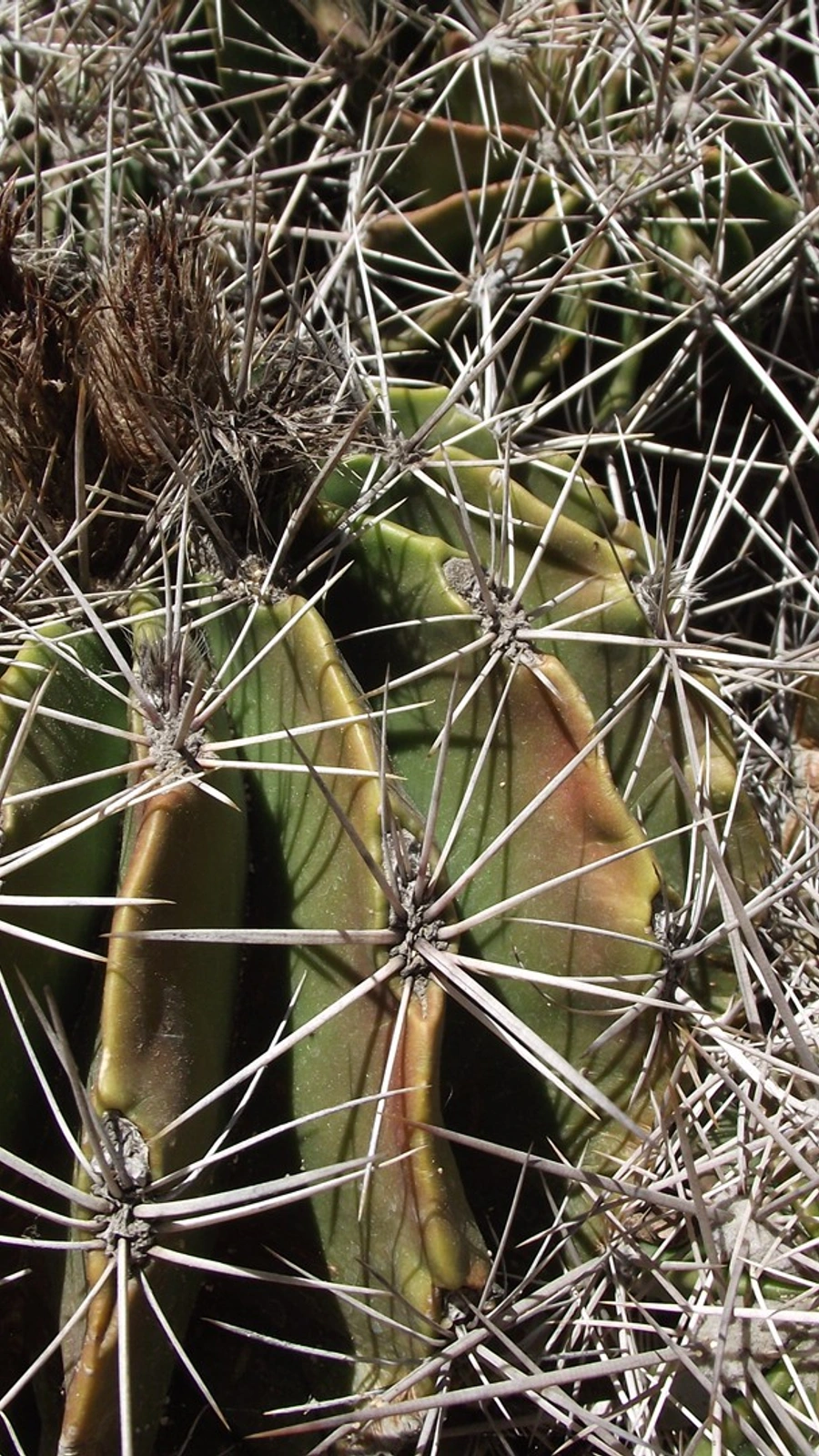 Reference image
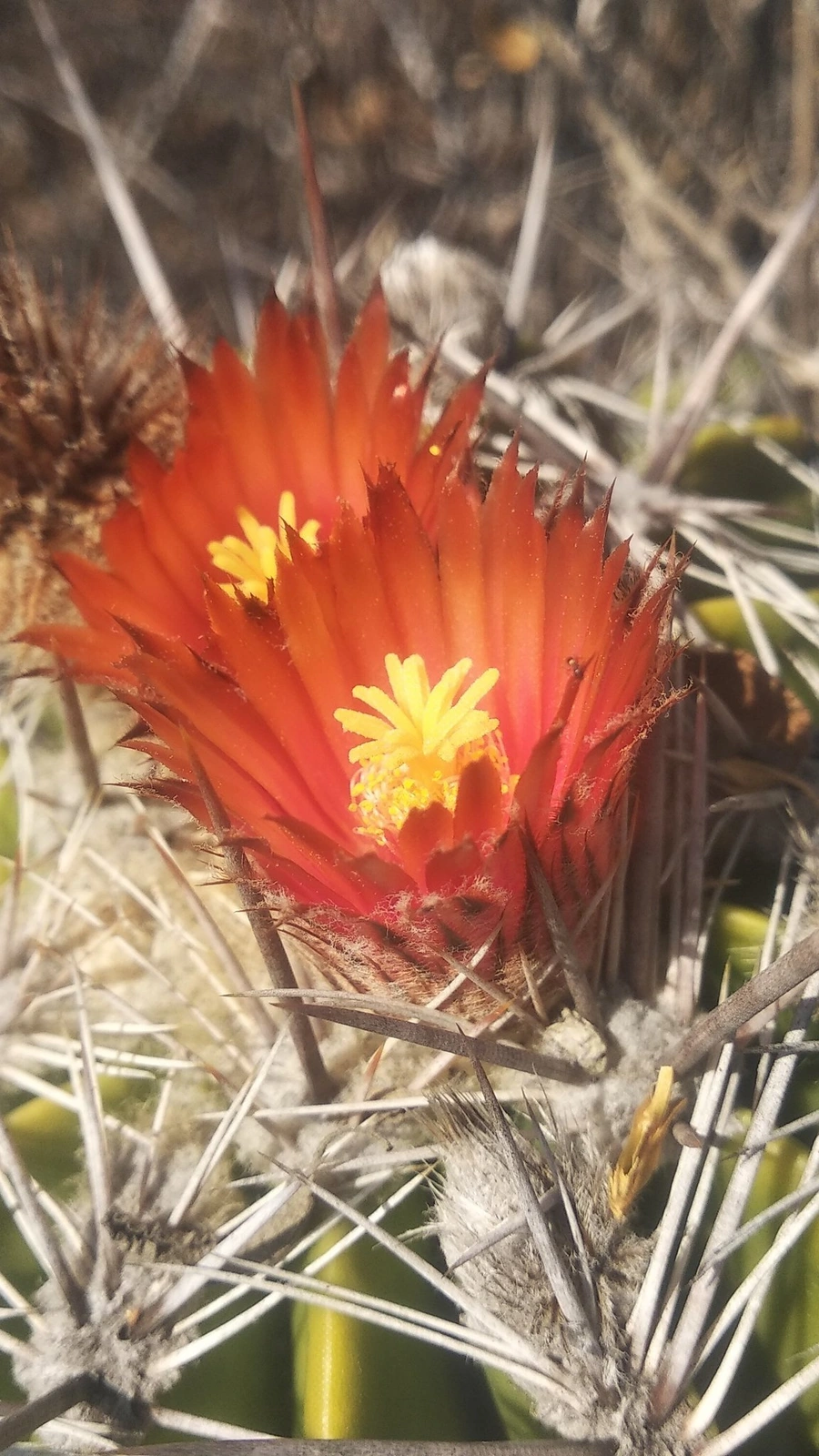 Reference image
Yellowish-Green Barrel Cactus
Ferocactus flavovirens is a clumping, succulent subshrub belonging to the family Cactaceae. Unlike many other solitary barrel cacti, this species is highly social, forming dense, multi-headed mounds over time.
Originally described within the genus Ferocactus, its specific epithet 'flavovirens' derives from Latin, meaning yellowish-green, which describes the characteristic hue of its epidermis and young spination 1.
This species is endemic to Mexico, with significant populations located in the arid regions of Puebla and Oaxaca. It thrives in dry deciduous shrublands (matorral) and on limestone hillsides 2.
Individual stems are cylindrical, deep green to yellowish-green, and can reach up to 30-40 cm in height. Large, mature colonies can span up to 2 meters in diameter and contain dozens of individual heads. The ribs are prominent and armed with stout, needle-like yellow to straw-colored spines. Yellowish-green, funnel-shaped flowers appear at the crown during the summer.
Ferocactus flavovirens requires full sun and a very porous, fast-draining potting medium. Water thoroughly only when the soil is completely dry. During winter, enter a strict dry regime to prevent root rot. It can tolerate light frost if kept bone dry, but keeping it above freezing is recommended.
Overwatering is the primary cause of failure, leading quickly to root and stem rot. Placing the plant in low-light conditions causes etiolation, where the stems stretch unnaturally and lose their robust spine development.
Requires full sun, preferably 6+ hours of direct sunlight daily for robust spines.
Allow the substrate to dry out entirely between waterings; keep dry in winter.
Thrives in mineral-rich, porous soils with excellent drainage, such as pumice and gravel.
Equipped with very sharp, stiff spines. Handle with thick leather gloves and keep away from pets.
Easy to moderate; highly resilient provided it is not overwatered.
Endemic to the dry matorral valleys and steep limestone hills of Puebla and Oaxaca in Mexico, adapted to severe drought and intense sunlight.
