
Light
Full Sun
Requires full, direct sun; insufficient light causes weak spines and stretching.
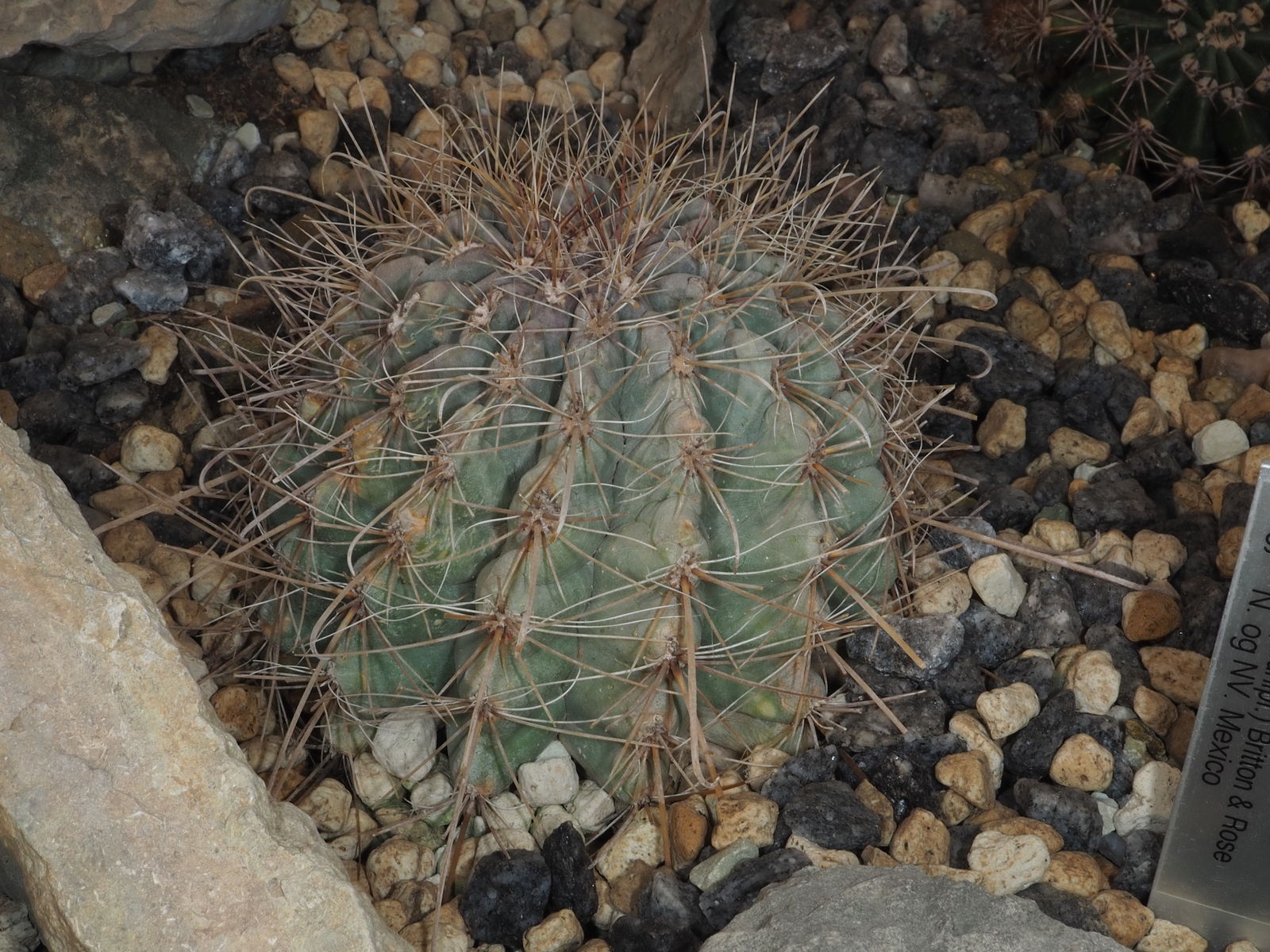 Reference image
Turk's Head Cactus
Ferocactus hamatacanthus, commonly known as the Turk's Head Cactus or Texas Hookedcactus, is a robust species within the Cactaceae family. Widely appreciated for its fearsome hooked spines and massive, fragrant yellow blossoms, it is a quintessential desert-dwelling succulent.
Originally described under the genus Echinocactus, the species was later classified into Ferocactus due to its rib structure and floral morphology 1. The specific epithet hamatacanthus derives from Latin, meaning 'hooked thorn,' capturing the most prominent physical attribute of the plant's armory.
This cactus is native to the Chihuahuan Desert, spanning the south-central United States (specifically Texas and New Mexico) and northern to central Mexico 2. It thrives on limestone hills, gravelly slopes, and dry shrublands at elevations ranging from 600 to 2000 meters above sea level.
The stem is initially globose, gradually becoming cylindrical with age, reaching up to 60 cm in height. It features 13 to 17 distinct, wavy ribs. The central spines are remarkably long, up to 15 cm, and strongly hooked. In late summer, it bears funnelform, satin-yellow flowers with red-tinted centers, followed by juicy, edible green fruits.
In cultivation, it requires a very gritty, porous potting medium with excellent drainage. It benefits from deep watering during hot summer months, provided the soil dries out completely between waterings. Full sun exposure is mandatory to maintain strong spine coloration and dense growth.
Overwatering and heavy, organic-rich soils are the primary causes of root rot. Lack of sufficient sunlight leads to etiolation (stretching) and weak spine production. Cold and damp winter conditions can easily trigger fatal fungal infections.
Requires full, direct sun; insufficient light causes weak spines and stretching.
Allow soil to dry out completely between waterings. Keep dry in winter.
Highly porous, mineral-based substrate containing pumice, grit, and limestone.
Sharp, strong hooked spines can cause painful punctures; handle with thick gloves. Non-toxic.
Very easy to grow if keeping water to a minimum and providing intense light.
Naturally distributed across the Chihuahuan Desert, including Texas, New Mexico, and northern Mexican states, inhabiting limestone slopes and dry shrublands.
