
Light
Full Sun
This cactus absolutely loves direct sunlight and should receive direct sun for most of the day. It performs best by a sunny window or outdoors.
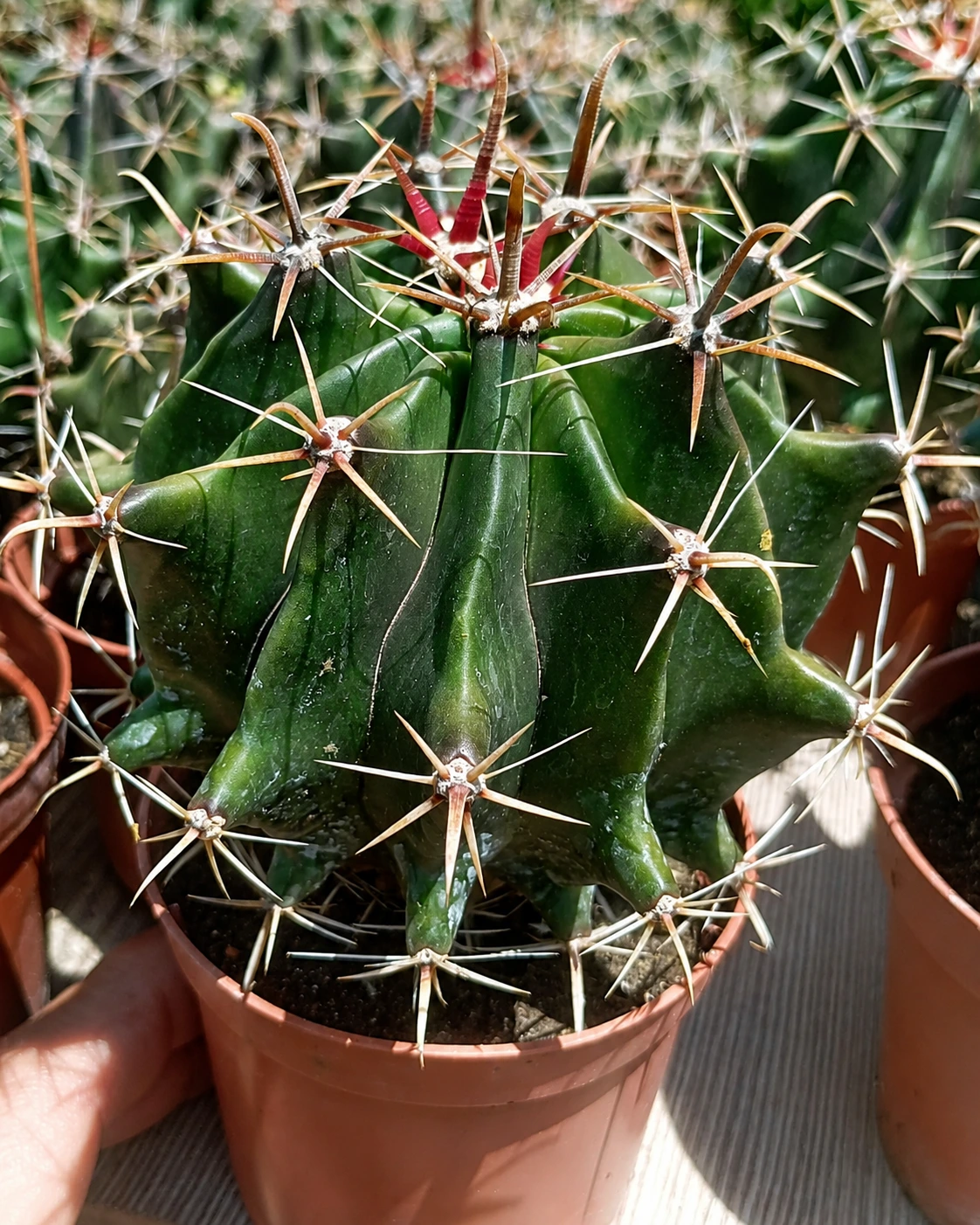
Candy Barrel Cactus
Ferocactus latispinus, commonly known as the "Candy Barrel Cactus" or "Devil's Tongue Barrel Cactus," is a striking species of barrel cactus native to Mexico, belonging to the Cactaceae family. Young plants typically exhibit a spherical shape, gradually developing into a barrel-like form as they mature, reaching up to 30 cm in height and 40 cm in diameter. It is characterized by its prominent, deep ribs adorned with long, flattened, and often reddish central spines that are notably hooked. These curved spines contribute to the plant's distinctive, somewhat fierce appearance, earning it the "Devil's Tongue" moniker 1.
Like most Ferocactus species, Ferocactus latispinus boasts a robust stem and formidable spines. These spines serve not only for defense but also perform crucial ecological functions such as protection from intense solar radiation and facilitating dew condensation. During the autumn months, the plant produces vibrant, funnel-shaped flowers from its apex, ranging in color from yellow and orange to red, and occasionally even purplish hues. These flowers typically open during the day and close at night, serving as an important nectar source for bees and other pollinators. Following flowering, yellow, egg-shaped fruits develop, which are consumed by birds and small mammals 2.
Thriving in the high-altitude deserts and semi-arid regions of Mexico, Ferocactus latispinus is exceptionally adapted to arid climates. Its ability to store water allows it to endure prolonged dry spells, with a root system that typically spreads close to the surface to quickly absorb rainwater. It is a popular choice for xeriscaping in arid gardens and a prized specimen in cactus collections globally due to its relatively easy care and aesthetic appeal. While listed as "Least Concern" by the IUCN Red List, habitat destruction and illegal collection can still pose threats to certain local populations.
This cactus absolutely loves direct sunlight and should receive direct sun for most of the day. It performs best by a sunny window or outdoors.
Water thoroughly in summer only after the soil has completely dried out. In winter, reduce watering to a minimum or cease entirely.
Use a specialized, very well-draining soil mix designed for cacti and succulents. Mixes containing coarse sand, pumice, and perlite are ideal.
Ferocactus latispinus has long, sharp spines. It can be dangerous for pets and children. Always wear thick gloves when handling the plant.
Care is relatively easy, but the correct light and watering regimen are crucial. It's a suitable choice for beginner cactus growers.
Ferocactus latispinus is indigenous to the arid and semi-arid regions of Central Mexico. It is commonly found in the states of Hidalgo, Querétaro, Guanajuato, San Luis Potosí, Jalisco, and Oaxaca, typically growing on rocky slopes and open, dry terrains.
