
Ferocactus pilosus

Mexican Lime Cactus

Overview

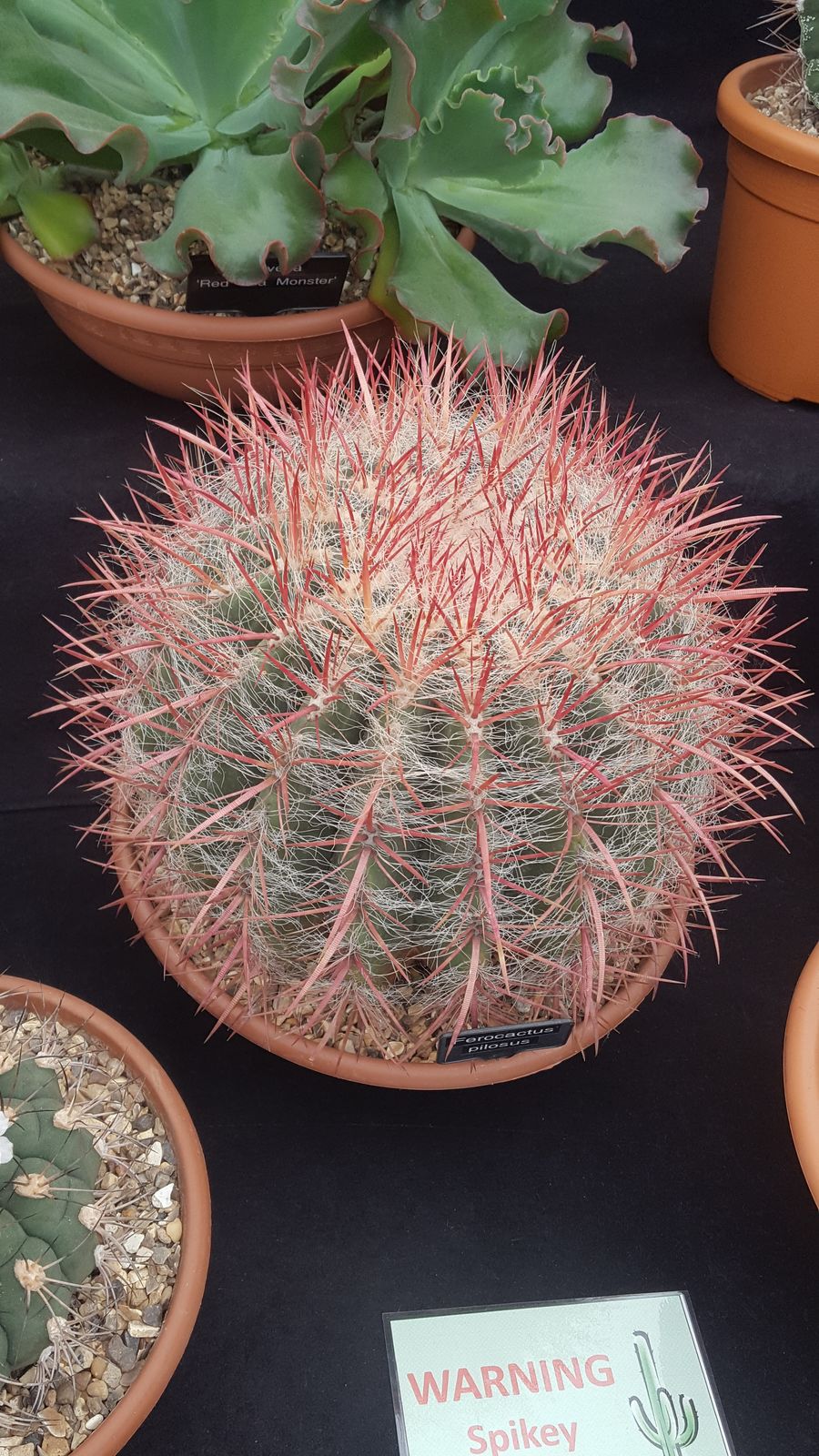
Ferocactus pilosus, commonly known as the Mexican Fire Barrel or Lime Cactus, is a striking, heavily-ribbed columnar cactus. It is famous for its bright red spines and thin white radial hairs.

Taxonomy and Naming

Belonging to the family Cactaceae, the species was classified in the genus Ferocactus 1. The specific epithet "pilosus" refers to the hair-like white radials surrounding the main red spines. It is also historically known as Ferocactus stainesii.

Distribution and Habitat

This species is native to northern and central Mexico, including states like Coahuila, San Luis Potosí, and Zacatecas 2. It populates rocky limestone slopes in desert and dry shrubland biomes at elevations of 1,200 to 2,400 meters.

Appearance

Initially globose, it matures into a massive cylindrical column up to 3 meters tall. Bright crimson central spines provide a fierce contrast against the green body, decorated with white, curly wool-like hairs. Bell-shaped yellow to red flowers emerge from the crown during late spring.

Cultivation and Care

This cactus requires full sun exposure and extremely well-draining mineral soil. If kept completely dry, it can tolerate brief, light frosts down to -4°C. Water thoroughly in summer only after the substrate has dried out completely, and keep dry in winter.

Common Care Mistakes

Overwatering is the primary cause of failure, leading to root rot. Insufficient sunlight will cause etiolation (stretching) and lead to dull spine coloration.

References

  1. Plants of the World Online (POWO). Kew Science. "Ferocactus pilosus".
  2. IUCN Red List of Threatened Species. "Ferocactus pilosus".
Light

Full Sun

Requires at least 6 hours of direct sunlight daily.
Watering

10-40 Days

Only water when soil is dry. Keep completely dry in winter.

Soil

Extremely well-drained cactus mix with coarse sand and pumice

Use a porous, mineral-rich soil mix with plenty of pumice.

Safety

Pet Friendly

The spines are extremely sharp and rigid; handle with thick gloves.

Difficulty

Easy

Very easy if kept dry and placed in a bright, sunny spot.

Native Habitat

Northern and Central Mexico

Native to the high-elevation desert slopes and shrublands of the Chihuahuan Desert, thriving in gravelly limestone soils.

Frequently Asked Questions

Can Ferocactus pilosus grow indoors?
Yes, but it must be placed in a very bright, south-facing window where it can receive at least a few hours of direct sunlight daily.
How often should I water it in summer?
Typically every 10-14 days, only after ensuring the soil is completely dry all the way to the bottom of the pot.
Should I water it during winter?
No, during winter dormancy, watering should be almost entirely suspended. A light splash once a month is more than enough.
Why are the spines losing their bright red color?
Lack of intense sunlight causes the spine color to fade. Plenty of direct sun is essential to maintain vibrant red spines.
Is it toxic to pets?
It is non-toxic, but its extremely sharp spines pose a serious risk of physical injury to curious pets.
What kind of pot and soil should I use?
Choose clay or terracotta pots with drainage holes, and use a gritty cactus mix containing plenty of pumice, lava rock, and coarse sand.
How fast does it grow?
It is a very slow-growing species. It takes many years to reach a columnar shape when kept in pot culture.
How often should I repot it?
Because of its slow growth, repot only every 3-4 years when the roots have completely filled the current container.
How do I get it to bloom?
Blooming requires maturity (usually over 10-15 years old) and ample direct sunlight during the active growing season.
I noticed the body getting soft, what should I do?
Softening is a sign of rot from overwatering. Stop watering immediately; if the base is rotted, you can cut and propagate the healthy top.