
Light
Full Sun
Requires full sun, preferably at least 6 hours of direct sunlight daily for healthy spine development.
 Reference image
Potts' Barrel Cactus
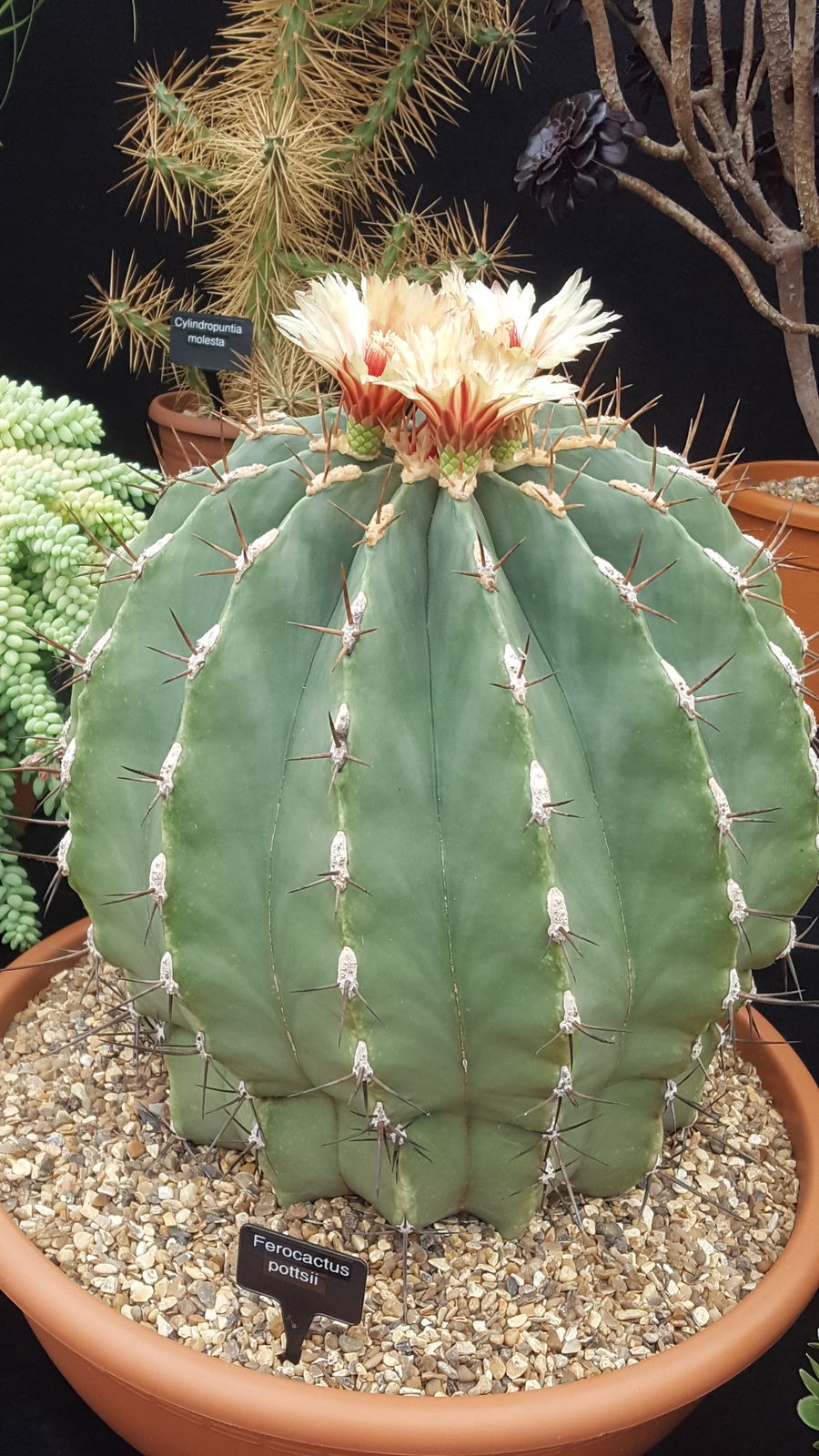
Ferocactus pottsii is a robust, heavily spined cactus species belonging to the Cactaceae family. Known for its distinct ribbed glaucous stem, it is a classic representative of the North American desert flora 1.
Originally described by Salm-Dyck, the species is placed within the genus Ferocactus, which translates to 'wild or fierce cactus'. The specific epithet honors John Potts, a 19th-century English mining manager and plant collector 2.
This species is native to northwestern Mexico, primarily in the states of Sonora, Chihuahua, and Sinaloa. It thrives in arid environments, dry shrublands, oak woodlands, and rocky slopes at elevations ranging from 800 to 2000 meters 1.
Initially globose, the stem becomes stoutly cylindrical with age, reaching up to 1 meter in height. It features well-defined ribs. The spines are strong, straight, and reddish-yellow when young, fading to dull grey. In summer, it produces attractive yellow cup-shaped flowers near the apex 2.
In cultivation, it requires maximum sunlight and exceptionally well-draining soil. Irrigation should follow a soak-and-dry cycle. During winter dormancy, keeping the soil completely dry allows the plant to tolerate brief frosts down to -4°C 1.
Overwatering during the winter and using dense, moisture-retentive soils are the most common mistakes, leading inevitably to root and stem rot.
Requires full sun, preferably at least 6 hours of direct sunlight daily for healthy spine development.
Water thoroughly when soil is completely dry in spring and summer, keep bone dry in winter.
Requires an extremely porous mineral mix consisting of pumice, perlite, gravel, and minimal organic matter.
Non-toxic, but the long, sturdy spines pose a physical hazard to pets and children.
Very easy if you avoid overwatering and provide sufficient sunlight.
Native to the dry slopes, hillsides, and deciduous woodlands of Sonora, Sinaloa, and Chihuahua in northwestern Mexico.
