
Light
Full Sun
Requires full sun for at least 6-8 hours daily; partial shade will cause stretching.
 Reference image
 Reference image
Schwarz's Barrel Cactus
Ferocactus schwarzii is a slow-growing, highly ornamental barrel cactus belonging to the family Cactaceae. Solitary in nature, this species starts as a globose plant and gradually becomes cylindrical with age. It is distinguished from other barrel cacti by its relatively few, short, and deciduous spines as it matures 1.
The species was described by George Lindsay in 1955. The specific epithet "schwarzii" honors Friedrich Schwarz, an influential German cactus collector and nurseryman based in Mexico who discovered many new species 2. It is commonly known as Schwarz's barrel cactus.
This species is endemic to the Mexican state of Sinaloa. It primarily grows on steep, rocky volcanic slopes, dry deciduous forests, and semi-arid shrublands at elevations between 100 and 300 meters above sea level 1. Although facing local habitat loss, it is currently listed as Least Concern (LC) on the IUCN Red List 3.
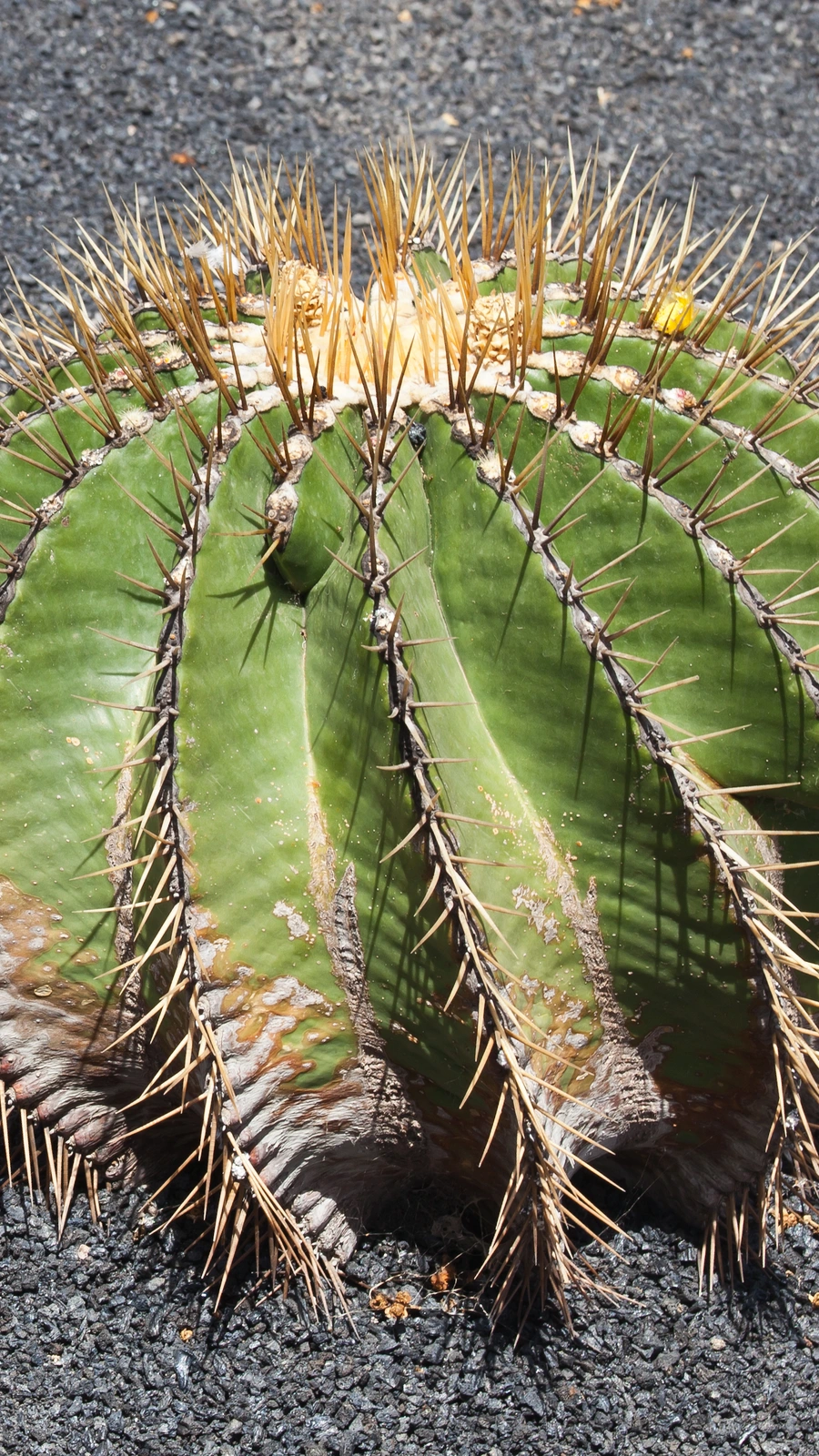
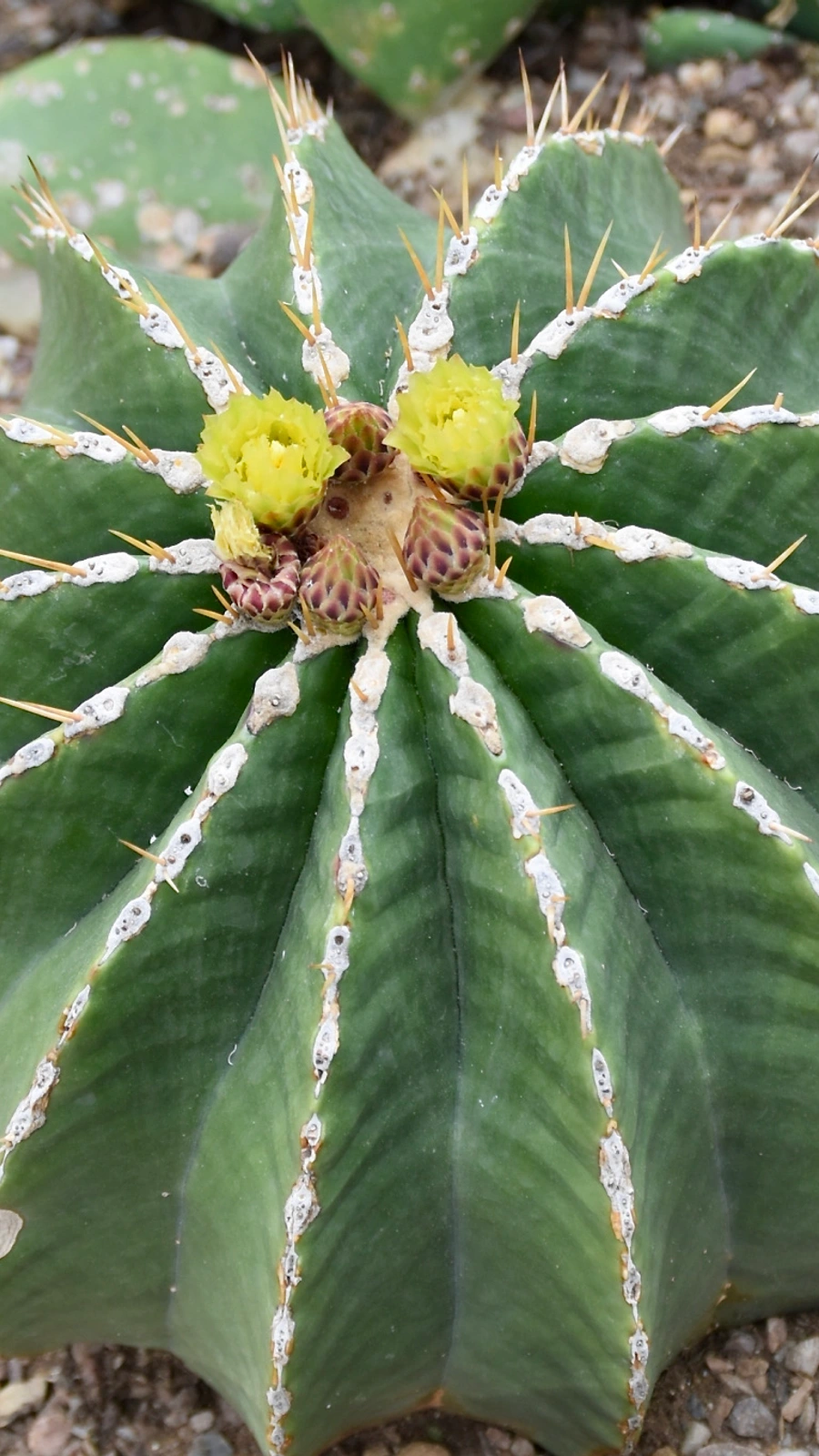
The stem is light green, initially globose, and later cylindrical, reaching up to 80 cm in height and 50 cm in diameter. It features 13 to 19 prominent, sharp-edged ribs. Areoles are initially felted with yellow wool but become glabrous over time. Spines are golden yellow, 1 to 5 in youth, but often drop off in older specimens. In summer, mature plants produce funnel-shaped, bright yellow flowers about 4 cm wide at the crown 2.
Ferocactus schwarzii thrives in full sun and well-ventilated positions. It requires highly porous, mineral-based cactus soil. During the active growing season in spring and summer, water deeply but allow the medium to dry out completely between waterings. In winter, keep the plant completely dry and protect it from freezing temperatures and high humidity.
The most prevalent issue is overwatering during winter, which quickly induces root rot. Insufficient sunlight leads to etiolation (stretching) and weak spine development 1.
Requires full sun for at least 6-8 hours daily; partial shade will cause stretching.
Water deeply in summer after the soil dries out; keep completely dry in winter.
Thrives in fast-draining, mineral-heavy soil enriched with pumice and coarse grit.
Sharp spines can cause injury; handle with care and keep away from pets and children.
Very easy to maintain, provided you avoid overwatering and protect from hard frosts.
Endemic to the state of Sinaloa in northwestern Mexico, where it populates steep, rocky slopes and dry tropical forest openings.
