
Light
Full Sun
Full direct sun is essential for proper spine development and flowering.
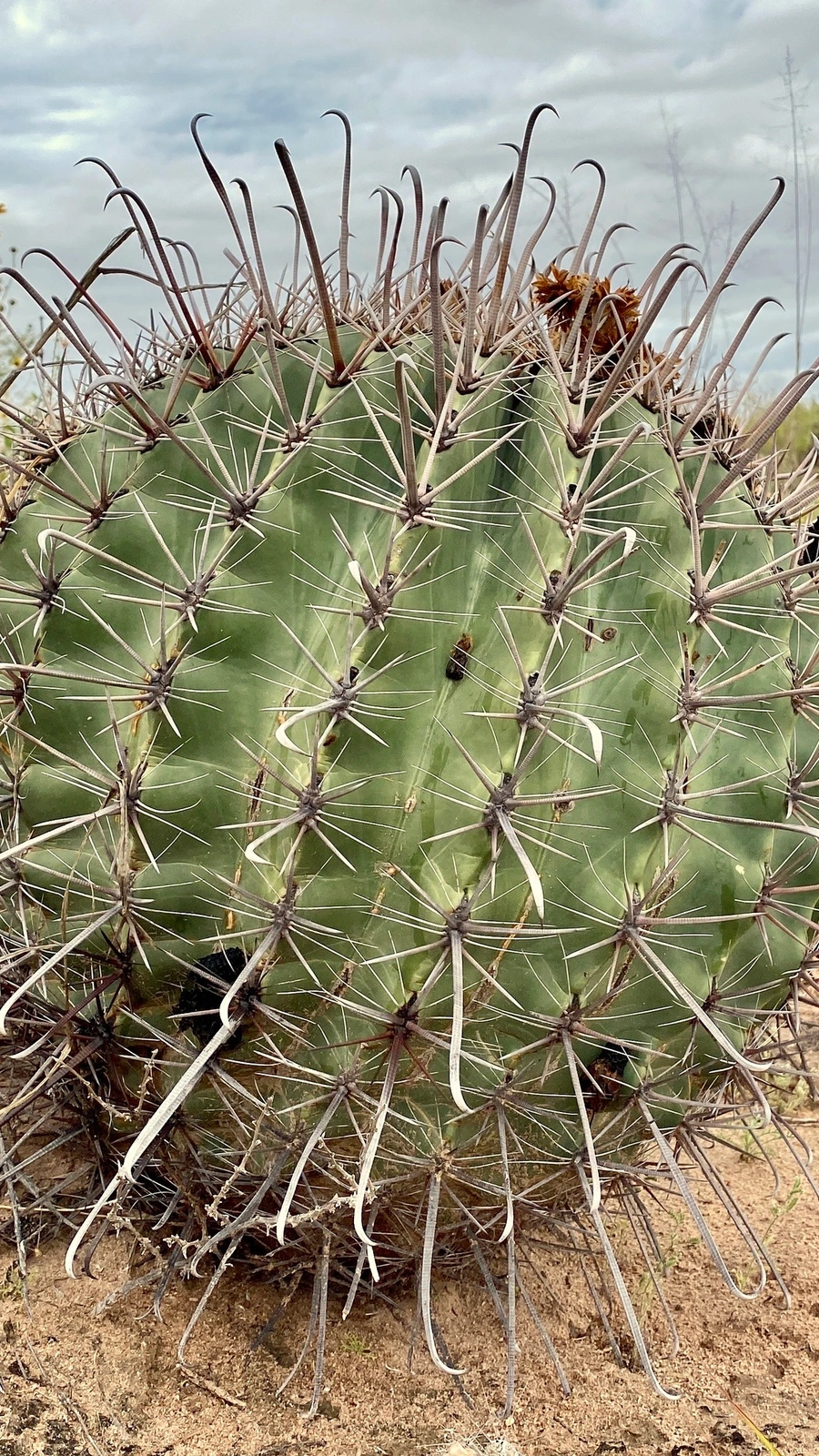 Reference image
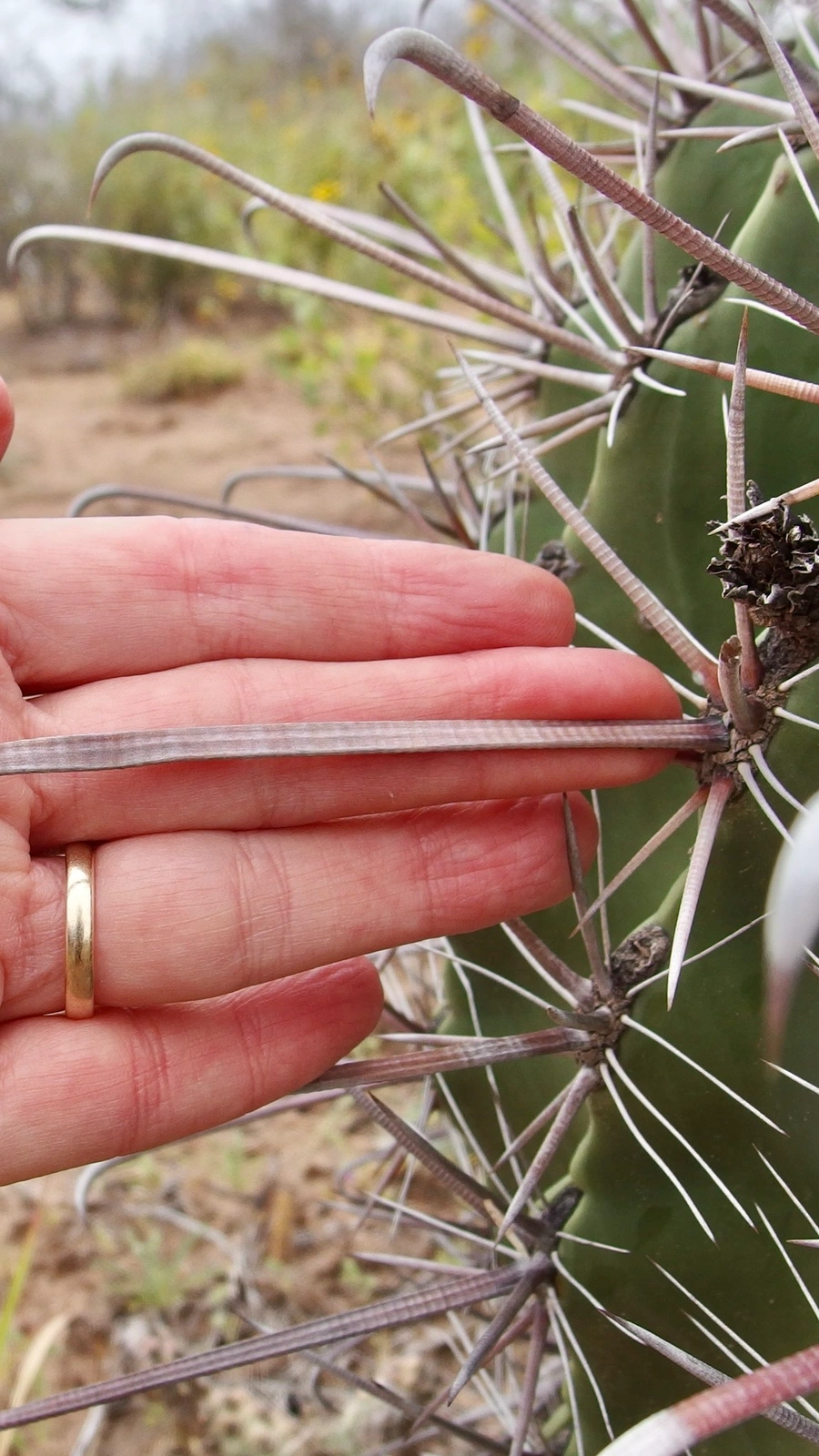 Reference image
Tiburon Barrel Cactus
Ferocactus tiburonensis is a highly resilient, barrel-shaped succulent subshrub belonging to the family Cactaceae. Endemic to Tiburon Island, this cactus is brilliantly adapted to extreme desert heat, saline coastal winds, and prolonged periods of drought.
Classified within the genus Ferocactus, this species was first formally described by George Lindsay. The specific epithet tiburonensis refers to its restricted native range on Isla Tiburón (Tiburon Island) in the Gulf of California, Mexico 1. While closely related to Ferocactus wislizeni, it is distinguished by its unique spine morphology and geographic isolation.
This cactus is strictly endemic to Tiburon Island in Sonora, Mexico 2. It thrives in hyper-arid desert scrublands and dry shrublands, ranging from sandy coastal flats to steep, rocky volcanic slopes. It grows from sea level up to an elevation of approximately 400 meters, fully exposed to intense, direct sunlight.
Ferocactus tiburonensis typically grows as a solitary, cylindrical or barrel-shaped stem, reaching heights of 1 to 1.5 meters and diameters of up to 50 centimeters. The stem features over 20 prominent, vertical ribs. Areoles bear stout, grayish-yellow to dull brown spines; central spines are rigid and slightly hooked. In summer, funnel-shaped, bright yellow flowers bloom at the meristem 1.
In cultivation, it requires a very gritty, fast-draining substrate. It demands full, unfiltered sun and a highly ventilated environment. Watering should be deep but infrequent, allowed only when the substrate is bone-dry. During winter, watering must be completely suspended.
Overwatering and using heavy, organic-rich soils are the most common causes of root and stem rot. Lack of light leads to etiolation, causing the stem to stretch and weaken.
Full direct sun is essential for proper spine development and flowering.
Water only when the soil is completely dry. Keep dry in winter.
Extremely well-draining cactus mix with high pumice or gravel content.
Equipped with very sharp, heavy spines; keep away from children and pets.
Extremely drought-tolerant but intolerant of overwatering; moderate difficulty.
Endemic to Tiburon Island in the Gulf of California, Sonora, where it occupies volcanic rocky slopes and dry coastal desert plains under intense sun.
