
Light
Full Sun
Requires full, direct sun for at least 6 hours daily; indoor plants need a south-facing window.
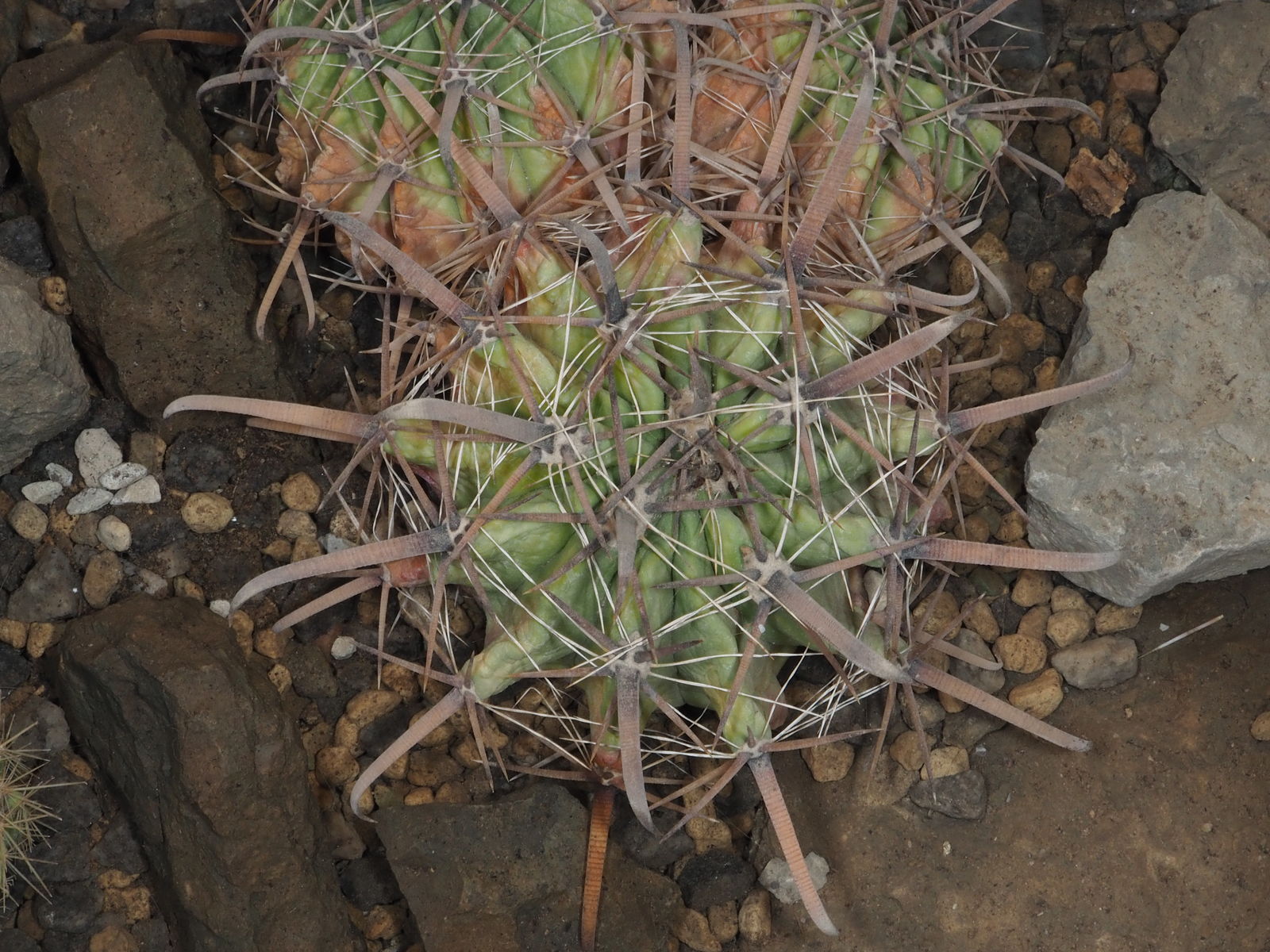 Reference image
Arizona Barrel Cactus
Ferocactus wislizeni, commonly known as the Arizona barrel cactus or fishhook barrel cactus, is a prominent, slow-growing succulent shrub famed for its stout cylindrical body and colorful, hook-like spines 1.
Belonging to the Cactaceae family, this species was named in honor of Dr. Friedrich Adolph Wislizenus, a 19th-century botanist who collected plants across the American Southwest 2. Its genus name Ferocactus translates to 'fierce cactus,' referring to its heavy armature.
Native to the Southwestern United States (primarily Arizona, New Mexico, and western Texas) and Northwestern Mexico, it thrives in the Sonoran and Chihuahuan deserts 1. It is commonly found on gravelly slopes, alluvial fans, and desert pavements up to 1,600 meters in elevation.
Initially globose, the stem becomes columnar with age, reaching heights of up to 3 meters in optimal wild conditions. It features 20 to 28 prominent ribs covered with dense clusters of red-brown, cross-ridged spines. The central spines are strongly hooked, earning it the nickname 'fishhook.' In late summer, rings of yellow, orange, or red flowers bloom at the crown, followed by persistent, bright yellow pineapple-shaped fruits.
In cultivation, Ferocactus wislizeni requires full sun to maintain its compact shape and vibrant spine color 2. It is exceptionally drought-tolerant and should be grown in a highly mineral, well-draining soil mix. Water thoroughly only when the soil has completely dried out, and suspend watering during the cold winter dormancy.
Overwatering and poorly draining pots are the primary causes of root rot. Lack of adequate direct sunlight causes etiolation, wherein the cactus stretches weakly toward light, losing its characteristic barrel shape and defense mechanisms.
Requires full, direct sun for at least 6 hours daily; indoor plants need a south-facing window.
Allow the soil to dry out completely between waterings. Water sparingly in winter.
Requires an airy, low-organic mineral mix rich in pumice, gravel, and coarse sand.
Non-toxic, but the rigid, hooked spines can cause painful punctures. Handle with extreme care.
Very easy for beginners, provided it is not overwatered and receives abundant light.
Widespread across the Sonoran and Chihuahuan deserts, from southern Arizona and New Mexico to Sonora, Chihuahua, and Sinaloa, growing on rocky, sun-baked desert slopes.
