
Light
Full Sun
Requires at least 6-8 hours of direct, unfiltered sunlight daily. Best placed at south or west exposures.
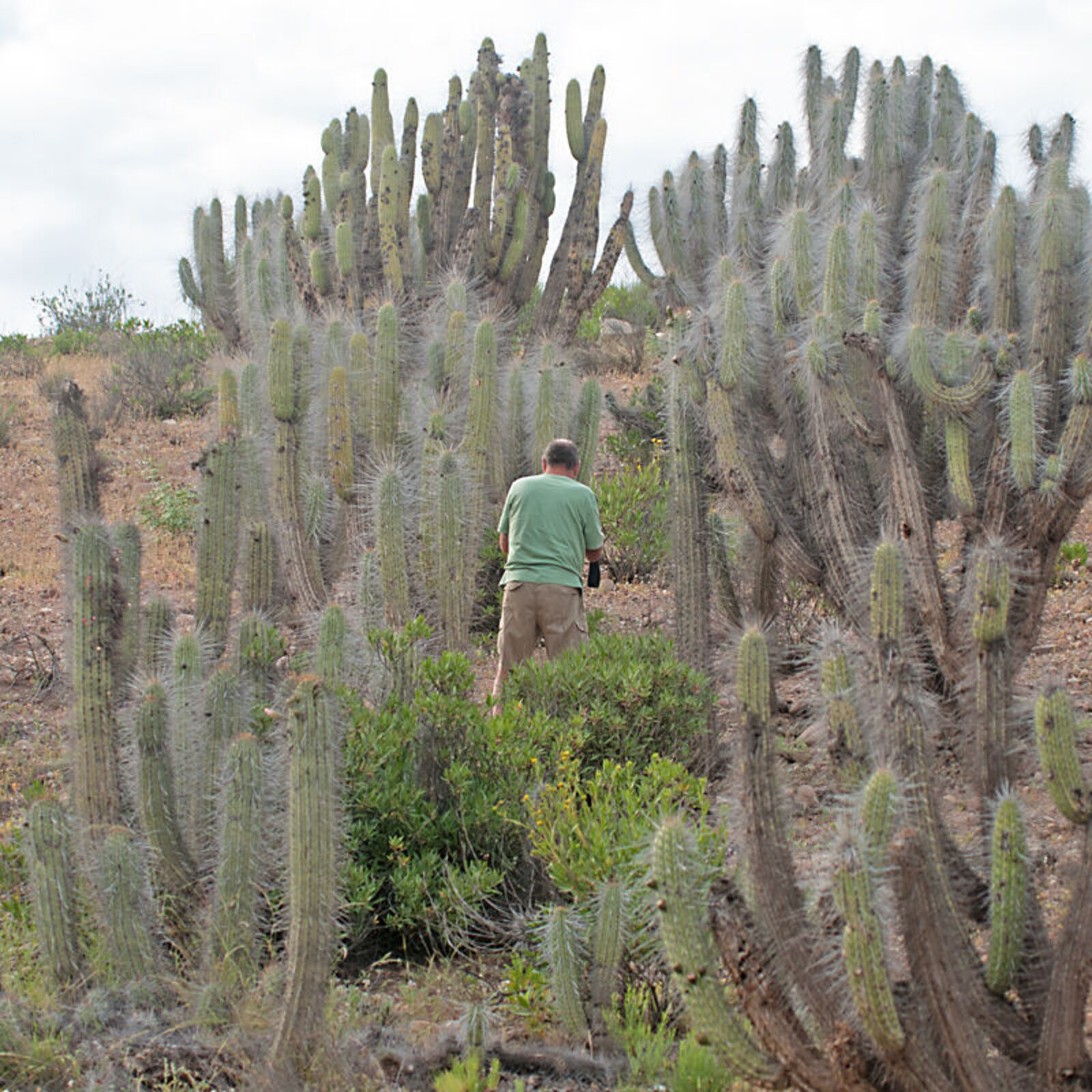 Reference image
Chilean Column Cactus
Leucostele chiloensis (formerly classified as Echinopsis chiloensis) is a majestic columnar cactus species endemic to Chile. Notable for its robust, tree-like growth and formidable, needle-sharp spines, this member of the Cactaceae family is highly prized in xeric landscaping and specimen cactus collections 1.
Originally described by Colla as Cactus chiloensis, this species resided in the genus Echinopsis for decades before phylogenetic and morphological re-evaluations placed it within the reinstated genus Leucostele 2. The specific epithet 'chiloensis' honors its native country of Chile.
This species is widely distributed across the arid and semi-arid regions of central and northern Chile. It thrives on rocky, sun-baked slopes, valleys, and matorral shrublands up to 1,800 meters above sea level, tolerating long periods of drought mitigated only by coastal fogs 1.
In the wild, it forms a heavily branched, shrubby or arborescent habit up to 8 meters tall. The cylindrical, dark green stems feature 16 to 22 prominent ribs. Large, woolly white-to-grey areoles bear stout, sharp spines, with central spines reaching up to 10 cm. Large, nocturnal funnel-shaped white flowers bloom along the upper stem during spring and summer.
Leucostele chiloensis requires full, direct sun and outstanding ventilation to maintain its compact form and heavy spination. Cultivate in extremely gritty, porous mineral substrates. Water deeply but infrequently in summer, allowing the medium to dry out completely, and keep completely dry during winter dormancy.
Excessive watering combined with dense, moisture-retentive organic soil is the leading cause of root rot. Inadequate light exposure leads to weak, pale, and stretched growth (etiolation). Wet soil during cold winter spells is almost always fatal.
Requires at least 6-8 hours of direct, unfiltered sunlight daily. Best placed at south or west exposures.
Allow the potting medium to dry out fully between waterings; practice strict dry-winter rest.
Highly porous, low-organic mineral mix rich in pumice, coarse sand, and fine grit is mandatory.
Equipped with long, incredibly sharp, and rigid spines; keep away from children and pets.
Very easy to care for, provided it receives adequate sunlight and is never overwatered.
Endemic to the arid hillsides, rain shadows, and matorral scrub ecosystems of Chile, where it grows amidst rocky terrains.
