
Light
Full Sun
Requires full sun and intense, direct light for optimal development.
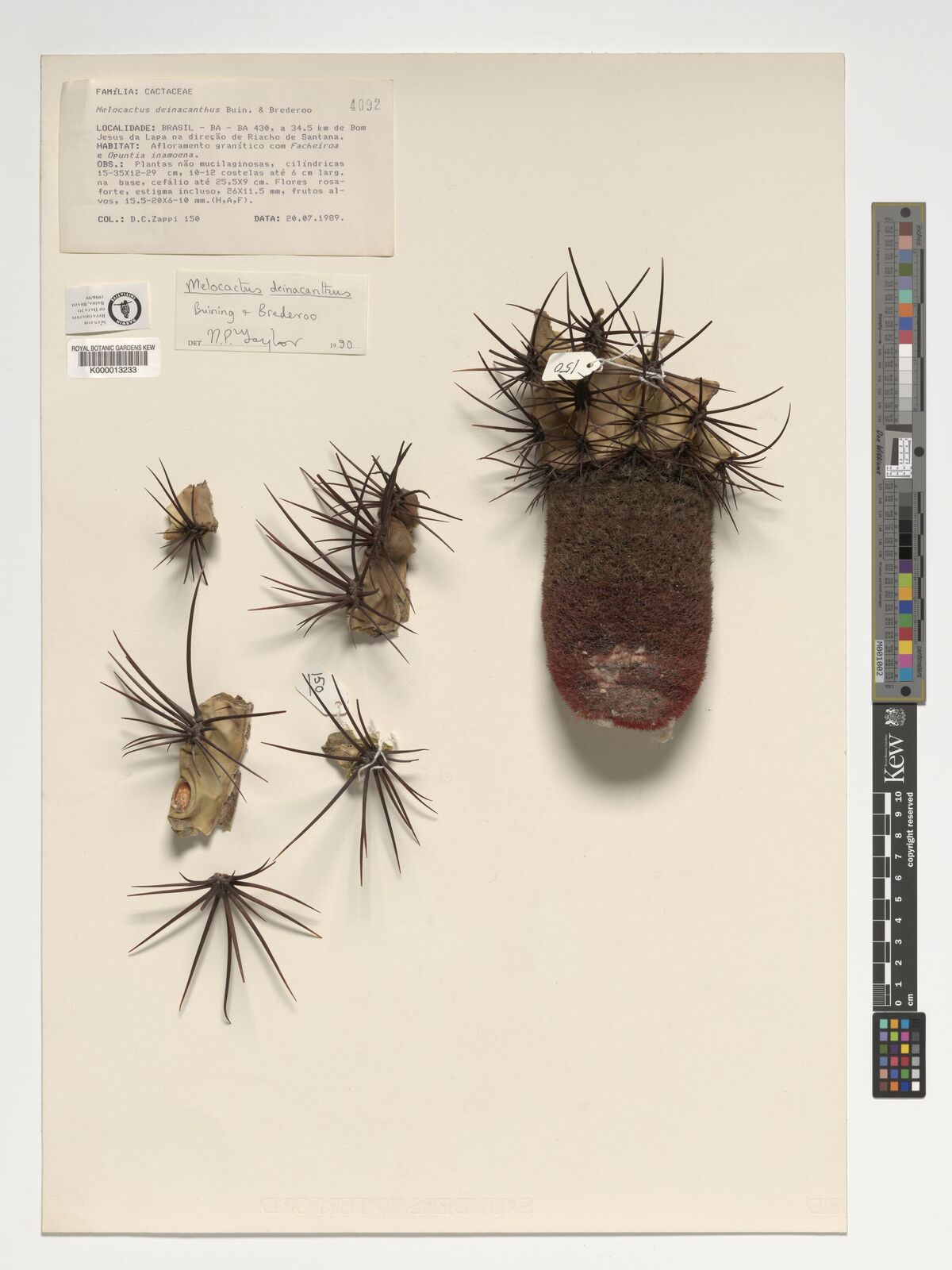 Reference image
Fearful Melon Cactus
Melocactus deinacanthus is a highly sought-after, rare cactus species belonging to the family Cactaceae. Known for its spectacular cephalium—a woolly, bristly structure that develops at the crown of mature specimens—this plant represents a fascinating evolutionary adaptation to seasonally dry tropical environments 1.
This species belongs to the genus Melocactus, which is distinguished from other cacti by the cessation of vegetative growth once the reproductive cephalium forms. The specific epithet "deinacanthus" is derived from the Greek deinos, meaning "terrible" or "formidable", and akantha, meaning "spine", reflecting the plant's robust and intimidating spination 2.
Melocactus deinacanthus is endemic to northeastern Brazil, particularly the state of Bahia. It is strictly adapted to the semi-arid Caatinga biome, where it grows on crystalline rocky outcrops, quartzite domes, and within narrow crevices. These habitats feature intense solar radiation and prolonged dry seasons 2.
The stem is solitary, globose to short cylindrical, and light green to grayish-green, possessing 10 to 12 well-defined ribs. The spines are stout, straight to slightly curved, and range from reddish-brown to horn-gray. Upon reaching maturity (usually taking over a decade), the plant produces a terminal cephalium covered in dense white wool and reddish-pink bristles. Small, magenta flowers and succulent pink fruits emerge exclusively from this specialized structure 1.
This species is considered difficult in cultivation due to its sensitive root system. It demands maximum sunlight and high temperatures. Watering must be done carefully; soil should dry out completely between waterings during the growing season and remain virtually dry in winter. Unlike many desert cacti, it cannot tolerate frost and should be kept above 12°C at all times 3.
Overwatering and using heavy, poorly draining soils are the primary causes of failure, quickly leading to root rot. Additionally, exposing the plant to temperatures below 10°C, especially in damp conditions, is fatal. Repotting mature plants with established cephalia should be avoided as they do not easily regenerate damaged roots.
Requires full sun and intense, direct light for optimal development.
Allow soil to dry completely between waterings in summer; keep nearly dry in winter.
Extremely well-draining, mineral-rich, grit and sand-based soil mix.
Non-toxic to pets, but has very sharp and strong spines that require careful handling.
Hard/Expert. Highly vulnerable to root rot and cold temperatures.
Endemic to the semi-arid Caatinga region of northeastern Brazil, where it thrives on hot, exposed rocky outcrops of quartzite and granite.
