
Light
Bright Indirect Light
Requires bright, indirect sunlight or filtered sun. Avoid intense, scorching afternoon sun.
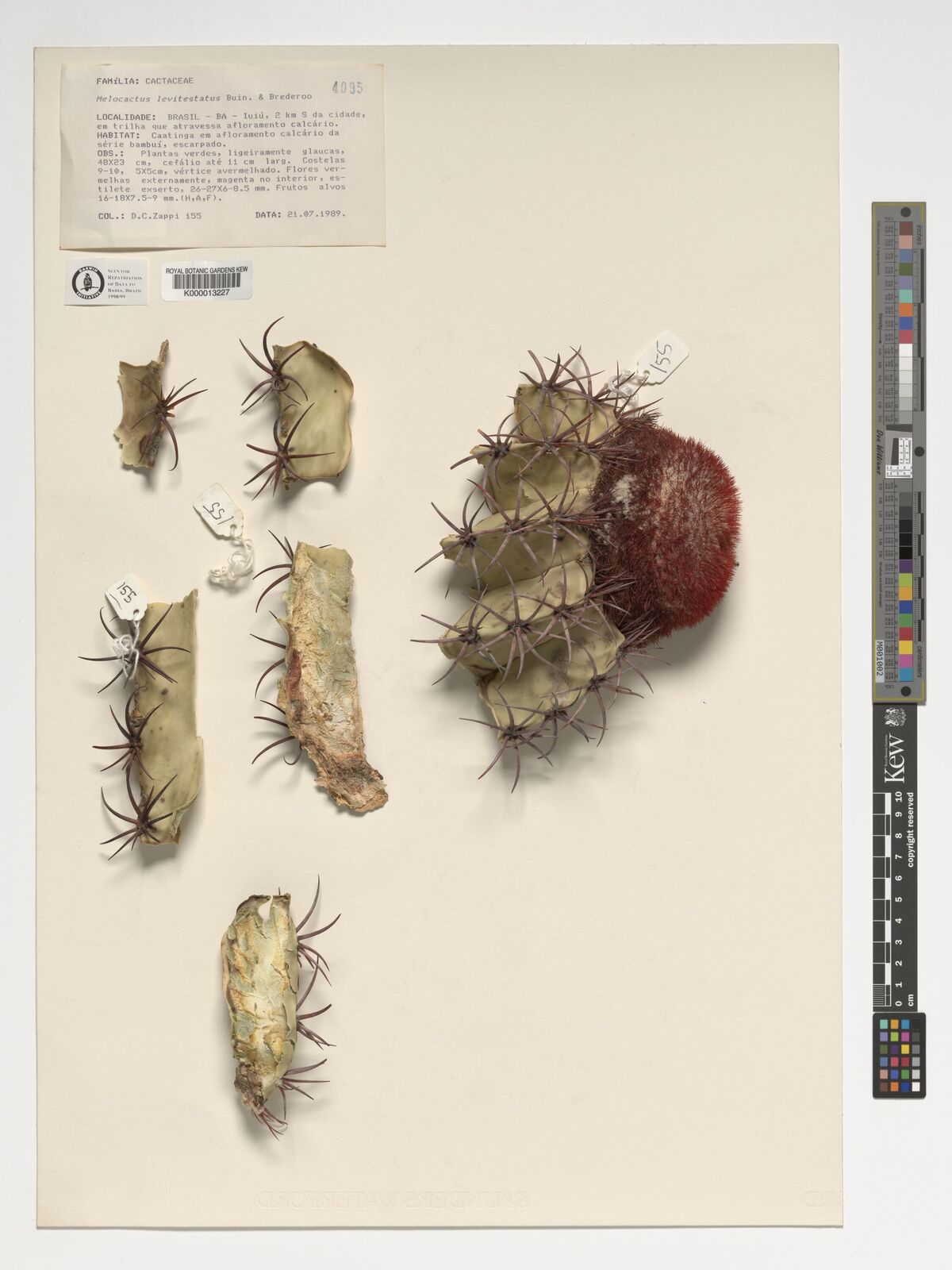 Reference image
Turk's Cap Cactus (Melocactus levitestatus)
Melocactus levitestatus is a highly distinctive member of the Cactaceae family, renowned for developing a terminal, woolly, and bristly structure called a cephalium upon reaching maturity 1. Like other species in the genus Melocactus, it ceases vegetative growth once the cephalium begins to form, dedicating its energy solely to this reproductive structure. It is highly prized by collectors but poses a challenge for beginners.
This species was first formally described in 1973 by Albert Frederik Hendrik Buining and Arnold J. Brederoo 2. The specific epithet "levitestatus" is derived from the Latin "levis", meaning smooth, and "testatus", referring to the seed coat, highlighting the characteristic smooth-shelled seeds of the species.
Melocactus levitestatus is native to eastern and central Brazil 1. It is found growing in seasonally dry tropical forests, known locally as Caatinga, where it colonizes limestone outcrops, rock slabs, and shallow, gravelly soils. It thrives in high temperatures and tolerates dry seasons.
The plant body is globose to shortly cylindrical, dull grey-green, with distinct vertical ribs. The areoles bear strong, slightly curved, greyish-brown radial and central spines. At maturity, it develops a prominent, cylindrical apical cephalium consisting of dense reddish-orange bristles and white wool. Tiny pink flowers emerge from this cephalium, followed by club-shaped, bright red fruits 2.
Unlike desert cacti, this tropical species requires a warm environment year-round and does not tolerate freezing temperatures. It prefers a very well-draining mineral substrate and benefits from moderate watering in summer, provided the excess water drains away instantly. In winter, watering should be reduced but not stopped entirely.
Overwatering in cold, poorly ventilated environments is the most frequent cause of loss, leading to rapid root rot. Additionally, because mature specimens have very delicate and slow-growing root systems, repotting should be avoided once the cephalium has formed.
Requires bright, indirect sunlight or filtered sun. Avoid intense, scorching afternoon sun.
Water thoroughly in summer after the soil dries. Keep barely moist in winter, as cold dampness is fatal.
Demands a highly porous, mineral-rich substrate containing pumice, grit, and optional limestone chips.
The sharp spines can cause injury. While non-toxic, keep away from pets and children due to physical hazards.
Hard difficulty. Requires careful watering control and stable warm temperatures, especially in winter.
Native to the semi-arid Caatinga biome of Brazil, where it grows directly on limestone rocks and slopes under tropical conditions.
