
Light
Bright Indirect Light
Prefers bright, indirect light; protect from scorching midday sun.
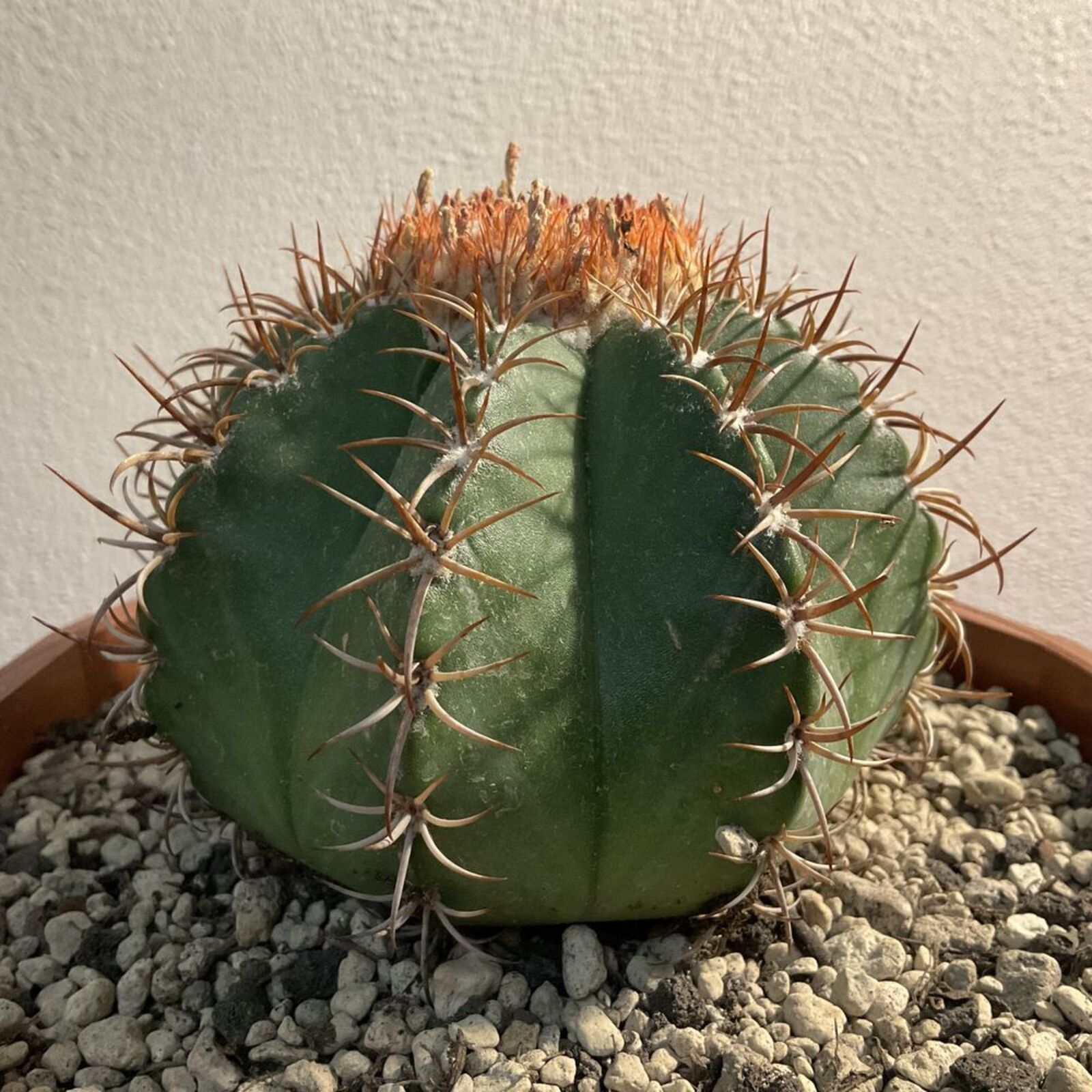 Reference image
Dwarf Turk's Cap Cactus
Melocactus matanzanus is one of the most intriguing members of the cactus family. Known for the colorful, woolly 'cephalium' that forms on its top once it reaches maturity, it is highly sought after by collectors. Its compact size makes it the ideal Melocactus species for indoor cultivation 1.
Belonging to the family Cactaceae, the species was named after the Matanzas province in Cuba, where it was first discovered. It is commonly referred to as the 'Dwarf Turk's Cap Cactus'. The plant was formally described by Brother León in 1934 2.
This species is endemic to Cuba, specifically limited to the Matanzas region. It thrives in seasonally dry tropical zones, growing on serpentine soils and rocky outcroppings among dry shrubs 1.
The stem is globose, bright green, and reaches only 8-10 cm in diameter, making it a dwarf species. It features 8 to 10 deep ribs armed with curved spines. Upon reaching maturity, it stops growing vegetatively and produces a striking orange-red cephalium composed of dense bristles and wool 2. Small, self-fertile pink flowers emerge directly from this structure, followed by decorative pinkish-white berries.
Unlike desert cacti, this tropical species requires warm conditions year-round. It cannot tolerate temperatures below 10°C. It prefers bright, indirect sunlight or filtered sun. During the active growing season, it enjoys more regular watering than typical cacti, provided the substrate is extremely porous 1.
The most frequent mistakes include exposing the plant to cold drafts during winter and overwatering when the temperature drops. The root system is delicate, and rot can set in rapidly if the soil remains wet in cool conditions.
Prefers bright, indirect light; protect from scorching midday sun.
Water thoroughly once the substrate is mostly dry during summer; keep nearly dry in winter.
Extremely porous mineral mix rich in pumice, grit, and limestone.
Non-toxic, but features sharp spines that require careful handling around pets and children.
Moderate difficulty due to strict warm temperature requirements and sensitive roots.
Endemic to a highly restricted area in the northern Matanzas province of Cuba. It grows naturally in serpentine barren habitats and tropical dry scrublands.
