
Light
Bright Indirect Light
Prefers bright, indirect light or filtered morning sun. Avoid scorching direct afternoon sunlight.
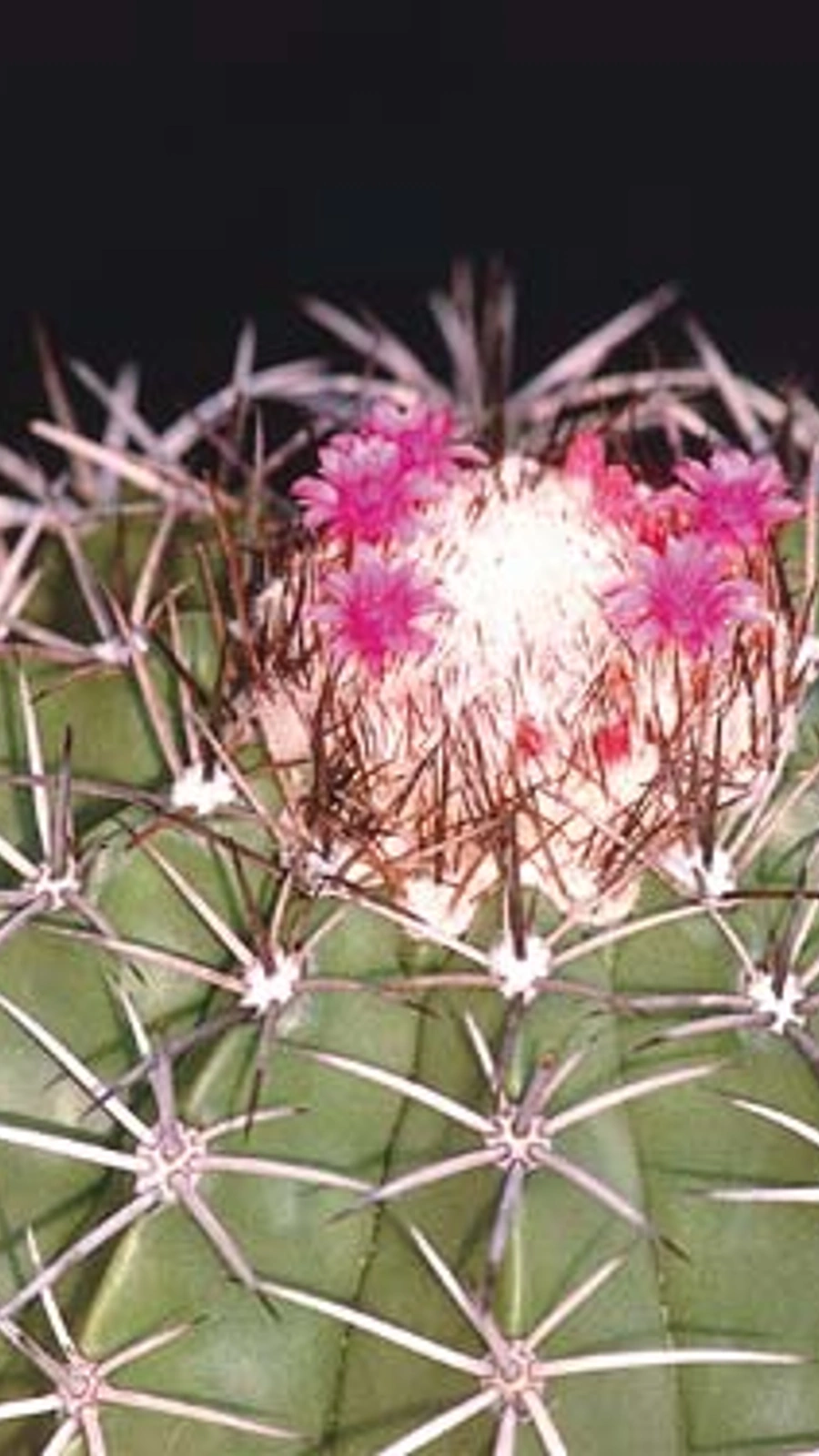 Reference image
Natal Melon Cactus
Melocactus natalensis is a unique succulent subshrub belonging to the family Cactaceae. Known for its distinctive ribbed green body, it is famous for developing a 'cephalium'—a specialized crown of wool and bristles at the top of the stem once it reaches maturity, which bears both flowers and fruits 1.
The species Melocactus natalensis is classified under the genus Melocactus. The specific epithet 'natalensis' relates to its geographical association with regions in northeastern Brazil, particularly near areas like Natal in Rio Grande do Norte, where these specific populations are documented 2.
This species is native to northeastern Brazil, spanning across states such as Alagoas, Bahia, Ceará, Pernambuco, Rio Grande do Norte, Sergipe, Paraíba, and Piauí 1. It thrives in seasonally dry tropical biomes, primarily in the arid Caatinga scrublands, rocky outcrops, and sandy gravel substrates 3.
It features a globose to short cylindrical green stem with well-defined ribs. The areoles bear strong, slightly curved spines. Upon maturity, the vegetative growth ceases, and a striking reddish-brown or white woolly cephalium forms at the apex. Small, pinkish flowers emerge from this cephalium, followed by cylindrical, fleshy, bright pink-red fruits.
Unlike desert cacti, Melocactus natalensis prefers a more tropical regime; it should not be kept completely dry for extended periods during the growing season. It requires high light but benefits from protection during the hottest hours of summer. Minimum winter temperatures must be kept above 10°C to prevent cold damage 2.
Overwatering during cold winter dormancy is the leading cause of root rot. Conversely, keeping young specimens without a cephalium bone-dry for months can desiccate their delicate root systems.
Prefers bright, indirect light or filtered morning sun. Avoid scorching direct afternoon sunlight.
Water regularly during summer when the topsoil feels dry. Limit watering to a minimum in winter.
Requires an open, highly mineralized soil mix with plenty of pumice, perlite, and coarse grit.
Equipped with sharp, rigid spines. Non-toxic to cats and dogs, but physically hazardous due to pricking.
Moderate care difficulty. Sensitive to cold temperatures and incorrect watering compared to other cacti.
Native to the dry, rocky terrains of northeastern Brazilian states including Rio Grande do Norte, Bahia, and Pernambuco. It is well-adapted to the seasonally dry Caatinga shrubland biome.
