
Light
Bright Indirect Light
Provide bright, indirect sunlight or filtered morning sun. Avoid harsh, direct afternoon sun during peak summer.
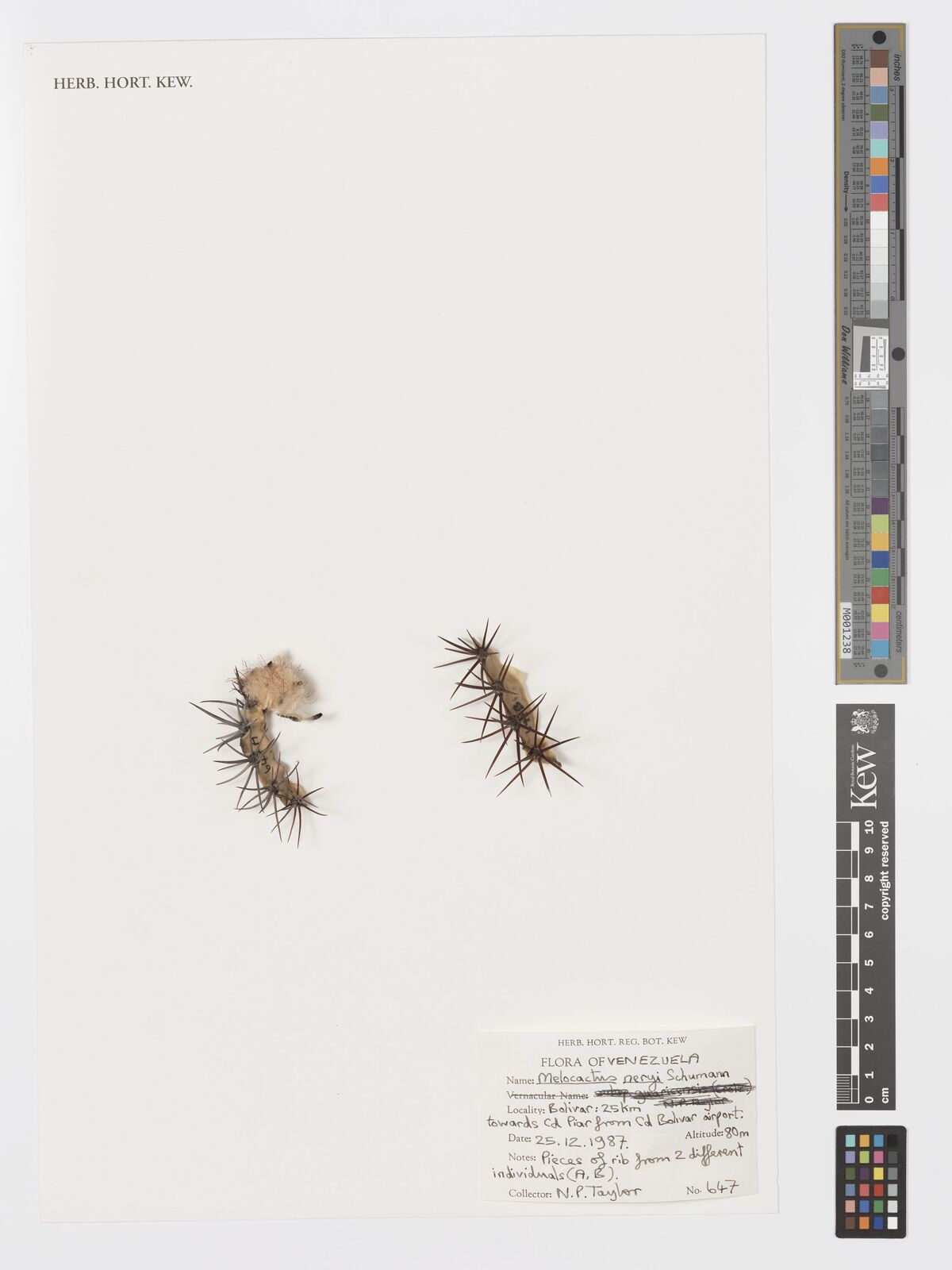 Reference image
Melocactus Neryi
Melocactus neryi is a globose, tropical cactus species belonging to the family Cactaceae, highly distinguished by the woolly, bristly structure known as a 'cephalium' that develops at the top of mature specimens 1. Once this cephalium forms, the plant ceases vegetative growth and dedicates its energy solely to flowering and fruiting.
Described in 1901 by the German botanist Karl Schumann, Melocactus neryi exhibits classical morphological features of its genus 1. The specific epithet neryi honors a regional explorer and patron. Culturally, it is often grouped under the common moniker 'Turk's Cap Cactus' due to the fez-like appearance of its mature cephalium.
Native to northern South America, this species is primarily documented across northern Brazil, Venezuela, Suriname, and Guyana 2. Unlike typical desert-dwelling cacti, Melocactus neryi thrives in wet tropical biomes, often colonizing granite outcrops (inselbergs), sandy savannas, and rocky crevices where drainage is superb but atmospheric moisture remains present.
The stem is spherical or slightly depressed-globose, usually reaching 10 to 15 cm in diameter with 10 to 15 prominent, well-defined ribs. Spines are slightly curved, reddish-brown to grey. The apical cephalium is densely covered with orange-red wool and short bristles, producing small pink flowers followed by clavate, bright red ornamental fruits 2.
Melocactus neryi requires warm temperatures year-round, ideally not dropping below 10°C, making it highly sensitive to frost. They prefer bright, filtered light and a highly porous, slightly acidic soil. Unlike desert cacti, they appreciate moderate humidity and regular watering when the soil dries out during the growing season.
Subjecting this tropical cactus to prolonged bone-dry winter droughts or freezing temperatures will lead to root dieback and rot. Standard desert cactus care guidelines should be adjusted to accommodate its tropical origin.
Provide bright, indirect sunlight or filtered morning sun. Avoid harsh, direct afternoon sun during peak summer.
Water thoroughly when the topsoil is nearly dry. Keep slightly damp but never waterlogged during winter.
Use a well-draining, mineral-heavy cactus soil with plenty of pumice, perlite, and coarse sand.
Non-toxic to pets, but the stiff, sharp spines can cause physical injury. Handle with care.
Moderate care level due to its susceptibility to cold damage and specific tropical watering needs.
Occurs naturally in northern South American countries including Brazil and Venezuela, growing on granite rock outcrops within humid tropical savannahs.
