
Light
Full Sun
Requires full sun. Insufficient light will cause the plant to lose its powdery blue color and grow weak.
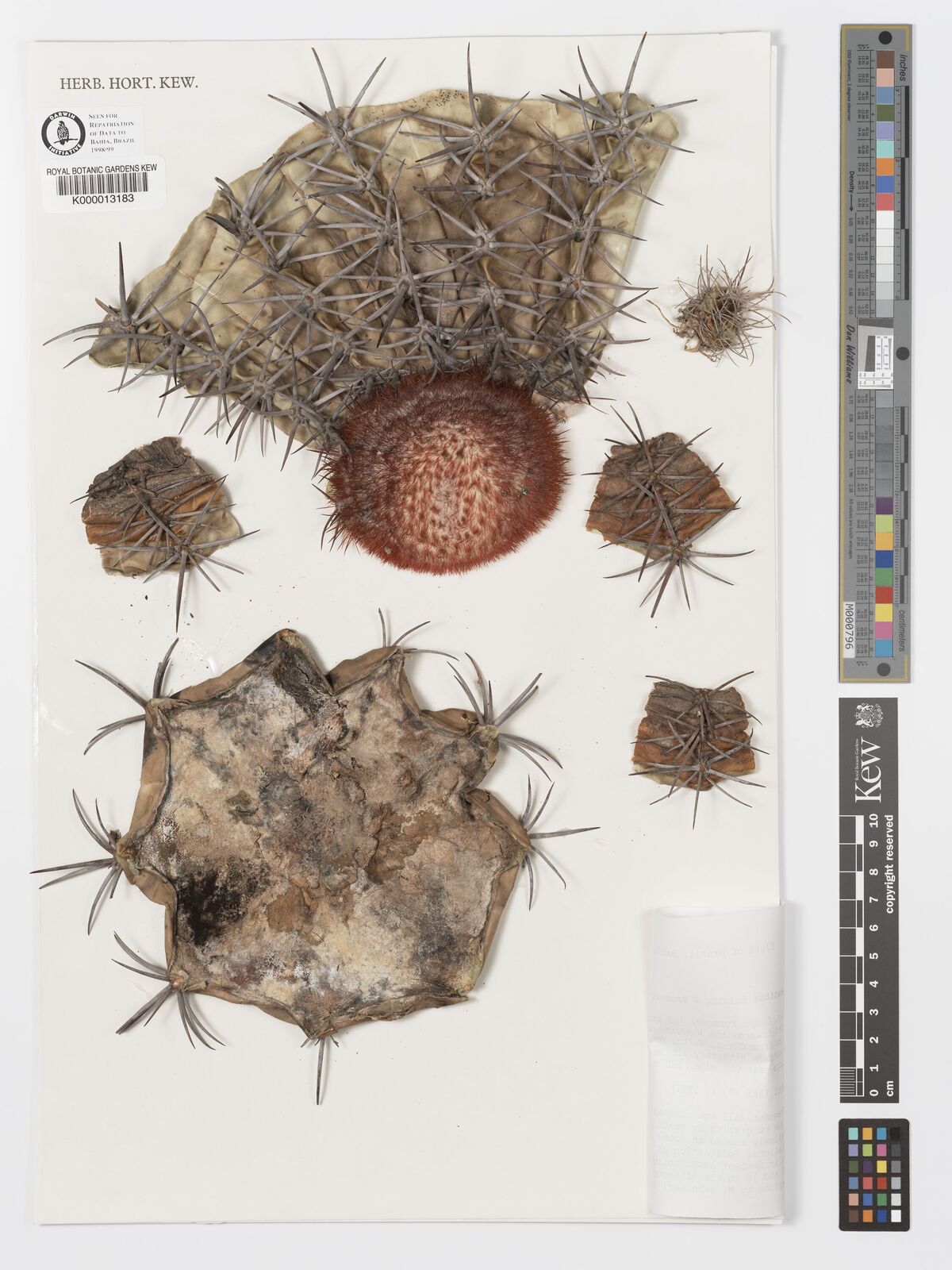 Reference image
Thick-spined Melon Cactus
Melocactus pachyacanthus is one of the most striking and highly sought-after members of the Cactaceae family. It is easily recognized by its intensely glaucous, powdery blue-grey stem and the distinctive reddish-pink felted cap called a "cephalium" that forms at the top of mature specimens.
The specific epithet pachyacanthus translates from Latin as "thick-spined," referencing the robust and rigid spines that line the ribs of the plant 1. Within the genus Melocactus, it stands out due to the remarkable waxy, powdery blue coating on its epidermis.
This species is endemic to northeastern Brazil, primarily found in the states of Bahia and Minas Gerais 2. It grows in seasonally dry tropical environments, particularly within the Caatinga biome, on exposed limestone outcrops and rocky fields. Due to habitat loss and illegal collection, it is classified as "Endangered" (EN) on the IUCN Red List.
The stem is globose to shortly columnar, reaching 15–30 cm in height and about 20 cm in diameter, featuring 9 to 11 sharp ribs. The juvenile plants exhibit a soft blue hue, which deepens into an intense glaucous blue as they mature. Upon reaching maturity, the plant stops growing vegetatively and develops a terminal cephalium composed of dense white wool and reddish bristles, from which flowers and pinkish fruits emerge.
This is considered a challenging species in cultivation. It has strict temperature requirements and cannot tolerate cold, damp conditions 1. It requires full sun exposure to maintain its beautiful blue coloration and needs an exceptionally free-draining, mineral-dominant potting soil.
The most frequent pitfall is overwatering during the winter dormancy or exposing the plant to temperatures below 10°C. Melocactus species have sensitive, shallow root systems that rot easily if kept wet or cold.
Requires full sun. Insufficient light will cause the plant to lose its powdery blue color and grow weak.
Water thoroughly only after the soil has completely dried out in summer. Keep nearly dry in winter.
Use an ultra-porous mineral mix composed of pumice, lava rock, coarse sand, and minimal organic matter.
Equipped with thick, very sharp spines that can cause injury. Keep away from pets and children.
Hard. Extremely sensitive to cold drafts and excess water. Best suited for experienced growers.
Native to northeastern Brazil, specifically within the dry Caatinga shrublands of Bahia and Minas Gerais. It thrives on barren limestone rocky outcrops under intense tropical sunlight.
