
Light
Full Sun
Requires full, direct sunlight to maintain spine density and healthy growth.
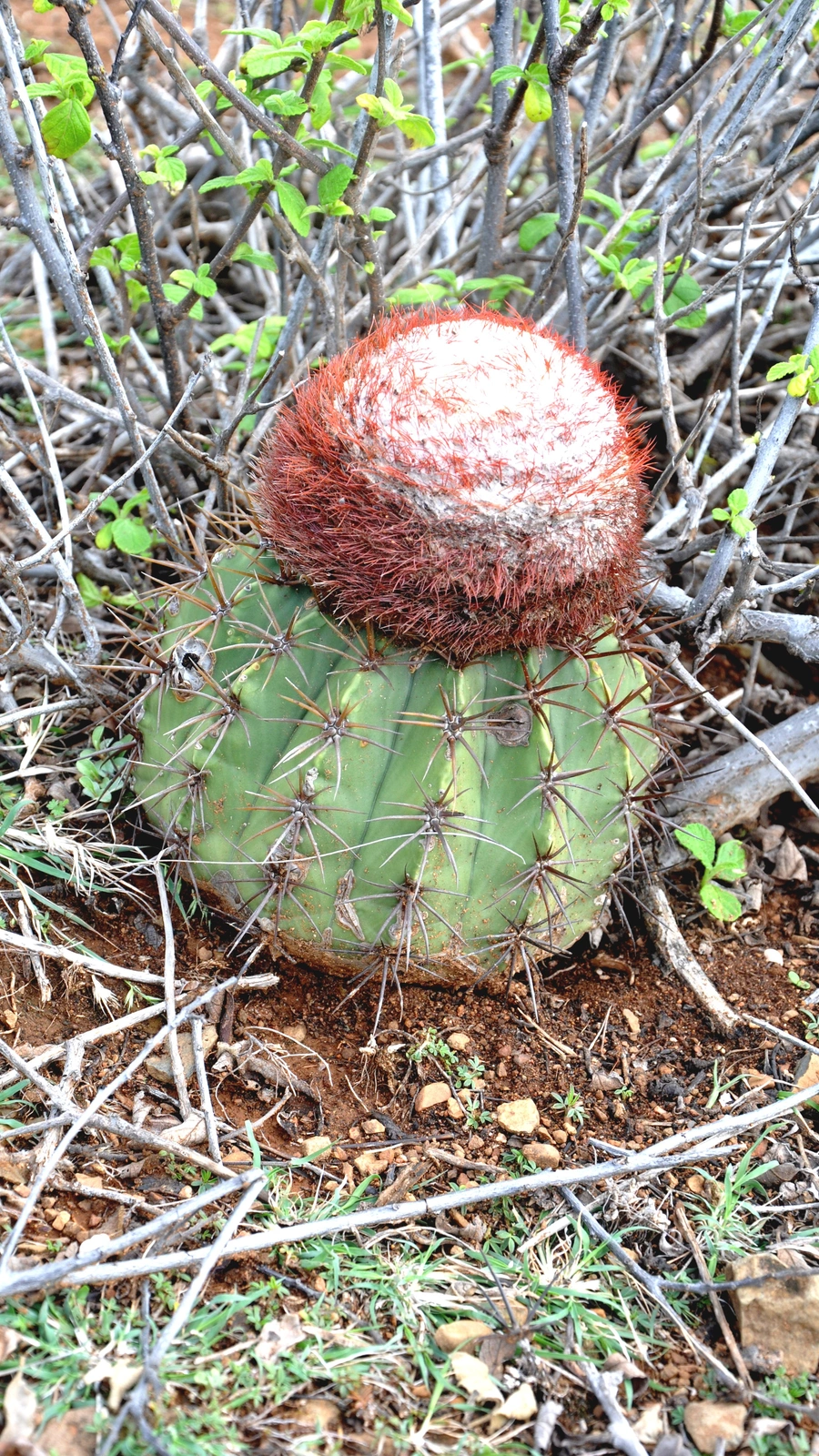 Reference image
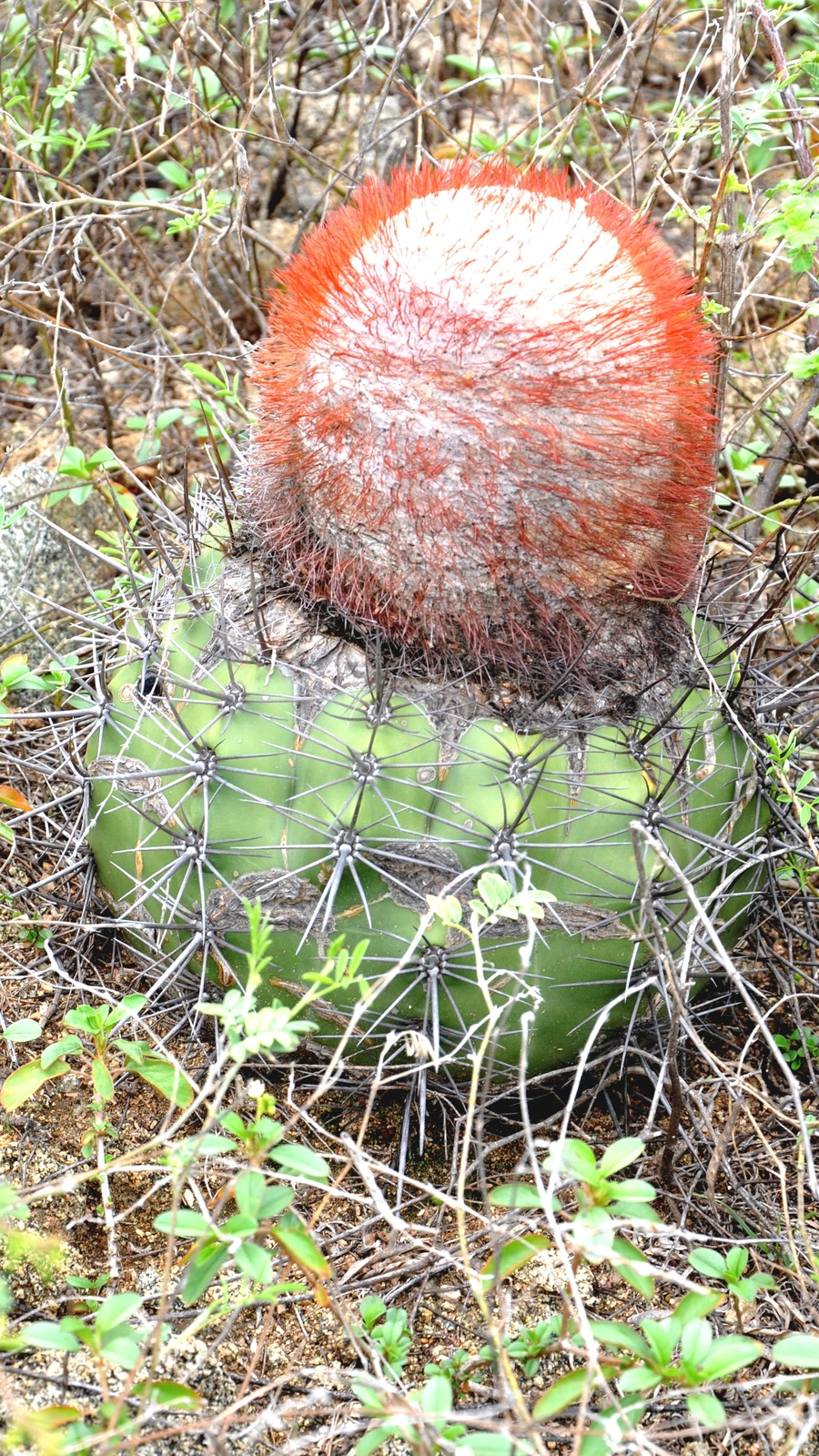 Reference image
Straw-Spined Melon Cactus
Melocactus stramineus is a distinctive species within the Melocactus genus, belonging to the Cactaceae family. Highly prized by succulent collectors, this plant is famous for developing a woolly, colorful cephalium at its crown once it reaches maturity. It grows as a succulent subshrub adapted to arid conditions.
Classified under the subfamily Cactoideae, the species name stramineus translates from Latin to 'straw-colored' or 'made of straw', directly referencing its stiff, pale-yellow spines. It remains a key focus for taxonomists studying the evolutionary adaptations of Caribbean and South American desert flora 1.
This species is native to the northern regions of South America and the Caribbean, including Aruba and adjacent islands 2. It thrives in seasonally dry tropical biomes, establishing itself on rocky outcrops, steep cliffs, and gravelly soils where solar radiation is high and drainage is instant.
The body of Melocactus stramineus is globose when young, slowly becoming short-cylindrical with age. It features distinct ribs lined with sharp, pale-yellowish to straw-colored spines. Upon reaching reproductive age, the vegetative growth ceases, and a dense, cylindrical cephalium of reddish-pink bristles and wool forms at the top 1. Small, tubular pink flowers emerge from this specialized crown.
Cultivating this species requires imitating its tropical coastal environment. It demands full sun exposure and a well-ventilated space. Water thoroughly during the hot summer months only after the potting medium has dried out completely. In winter, keep the plant dry and warm, as it has low tolerance for frost and damp cold 2.
The most frequent failure in maintaining this cactus is overwatering during its semi-dormant winter phase, which quickly leads to root rot. Additionally, placing the plant in a shaded indoor corner will stall growth and prevent the iconic cephalium from ever developing.
Requires full, direct sunlight to maintain spine density and healthy growth.
Allow the substrate to dry out entirely between waterings. Reduce to a minimum in winter.
Highly porous, mineral-heavy substrate with pumice, grit, and minimal peat.
Has sharp, rigid spines. Keep out of reach of curious pets and young children.
Moderate care level due to strict watering needs and sensitivity to cold, damp roots.
Naturally distributed across the arid, rocky terrains and coastal bluffs of the Caribbean and northern South America, where it thrives in coastal tropical microclimates.
